Dark Clouds with  a Bright Silver Lining


YouTube’s algorithm can produce interesting results. It recently recommended two sharply contrasting podcasts. One was a sober analysis of church decline in rural Illinois by a self-described “old geezer” Christian; the other was an “audit” by a young Gen-Z atheist who raved about his visit to an Orthodox Liturgy. That afternoon I found myself going back and forth between feeling pessimistic, and feeling hopeful as I watched the two videos.

The purpose of this article is to stimulate discussion about the current religious situation in the United States. Do we indeed have a church attendance crisis in America? Does Christianity have a future in America? Can Orthodoxy help reverse church decline in America?


The Coming Church Attendance Crisis” [54:12]


Tom Wadsworth, a former pastor and independent scholar, presents the findings of his survey research which he conducted in his hometown of Dixon, Illinois, from 1983 to 2023. His research deserves our attention because of its solid data and meticulous methodology. One surprising finding is that Gallup polls significantly overestimate the percentage of Americans who attend church/religious services. Where Gallup polls report that 31% of Americans attend church services (based on self-description), Wadsworth estimates that the actual percentage may be around 13% (based on head counts) (see 18:15-24:54; see 24:12). Wadsworth notes that if church attendance is 13% for a conservative, rural area, like Dixon, Illinois, then the rate of church attendance is likely to be even lower in major urban areas like Chicago, Orlando, New York, etc. In other words, the problem of church decline may be even worse than we think it is.

Wadsworth introduces the concept of “critical mass”—the minimum size or amount of something required to start or maintain a venture. For churches to survive they need a certain number of congregants and income to survive. Which begs the question: What are the critical thresholds needed for a church to survive? Wadsworth hypothesizes that if a church has: (1) 40 in attendance on average and (2) 60% of its attendees are 65+ in age, then that church is likely to close its doors in ten to twenty years (28:16). This numbers-driven approach is pragmatic and helps generate a realistic assessment of a congregation’s vitality. These two findings—actual attendance rates and critical mass needed for church growth—are what makes Wadsworth’s presentation noteworthy. Here he breaks new ground. While Wadsworth’s discussion of ten factors contributing to church decline (31:17-42:06) is also worth considering, this is familiar ground that has been discussed by others. Among the reasons he gives for church decline are the recent public pastor scandals, the pandemic lockdown, the polarizing effects of the religious right, the 9/11 effect—the ejection of religious fanaticism, youths rejecting the Evangelicalism of their parents, the effects of social media on socialization, the declining birth rate, and the fact that secular culture is now in fashion, etc.

Overall, this author finds Wadsworth’s discussion of possible causes for church decline to be full of insights. However, I do have a few quibbles with him. The youth’s rejection of their parents’ Evangelicalism is not so much a causal factor as it is a description of an aspect of the overall decline. Based on anecdotes I have read on the Internet; I am inclined to agree with his identifying the Religious Right as a contributing factor. However, one must also take into account the drift of the historic mainline denominations towards secularism and liberalism. The drift away from historic orthodoxy in the mainline denominations has resulted in liberal theology devoid of belief in the supernatural, i.e., watered down Christianity. As a former atheist, I find mainline Protestantism lacking the robustness and vitality of historic supernatural Christianity. Another factor I believe that Wadsworth’s analysis overlooks is the impact of rising divorce rates. I suspect that children of divorce find it harder to feel at home in churches that hold the intact nuclear family to be the norm; divorcees, single parents, never-married singles, and those with confused sexual identities will feel unwanted and marginalized.
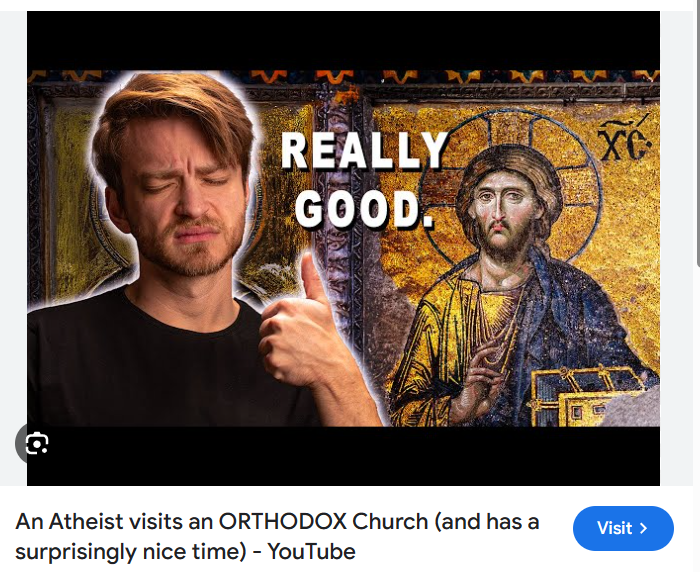

An Atheist visits an ORTHODOX Church (and has a surprisingly nice time)” [25:20]

Jared Smith, creator of Heliocentric, visited an Antiochian Orthodox parish and rated it as “exceptional,” a “Knock ‘em dead! Home run out of the park!” experience. Unlike Tom Wadsworth’s careful analysis, Jared Smith’s report consists more of comparisons between what he saw at one Orthodox parish against other churches he had visited. He notes that a lot of thought and care had gone into the interior of All Saints Antiochian Orthodox Church and that the church was built for reverence. He contrasts this against the ugliness of the four bare walls of “the run-of-the-mill box church” or “a CVS church” (2:45-3:05).

Jared described how the greeter welcomed him warmly but did not pounce on him as in other churches. Then, as the greeter was explaining the church service, the priest entered the foyer, censing the room. The greeter paused, turned to the priest, and bowed in respect (5:36). For Jared Smith, that was impressive because it showed that in the Orthodox Liturgy, God is the center of the show, not you. I found his criticism of Protestantism’s audience-centered approach to worship quite insightful. It suggests that among the Gen-Z cohort there is a hunger for reverence that is not being met by Protestantism’s contemporary worship service. Jared Smith was surprised that he was invited to meet with the priest one-on-one (7:52). His  experience has been that pastors only meet with loyal church members, not with outsiders. Sadly, it seems that personal contact with the pastor has become a rare exception, especially with huge mega churches (18:20, 20:27). I was surprised by Smith’s observation of icons in the Orthodox church. The icons of the saints reminded him that we are not alone but surrounded by a great cloud of witnesses (11:05). This contrasts sharply with the Baptists’ emphasis on Jesus and you—and you alone.

Part of Jared’s church review was the coffee hour (16:14 ff.). He was surprised that the priest stayed around after the Liturgy, taught adult religious education class, talked with people after the class, then to Jared’s surprise, invited him to his house for coffee. For Jared, the one-on-one personal contact was a far more effective way of doing outreach than the didactic lecture approach favored by Protestant Evangelicals. He also noted that the priest did not attempt to argue him out of his atheism, but accepted him.

What I find striking is that Jared Smith is the demographic polar opposite of Tom Wadsworth. Jared is in his late 20s, a former Evangelical, a graduate of Wheaton College, etc. His glowing description of Orthodoxy represents a bright silver lining in an otherwise gloomy situation described by Tom Wadsworth.

Jared Smith’s positive assessment of Orthodoxy seems to be part of a broader trend. The New York Post in December 2024 published an article: “Young men leaving traditional churches for ‘masculine Orthodox Christianity in droves.” This article has caught the attention of many and has generated considerable discussions among Protestants. If Orthodoxy can appeal to Gen-Zs like Jared Smith, then it is possible that the problem of church decline can be arrested and possibly reversed.



What Does the Future Hold?

The overall religious picture for the United States looks grim. It is like a long, extended drought drying up the landscape with plants and trees everywhere slowly dying off. This religious drought has been going on for several decades now. Surprisingly, there are a few spots of greenery popping up here and there. One of these spiritual oases is Eastern Orthodoxy. The recent influx of young men flocking to Orthodoxy can be seen as something like a rain shower that potentially signals a change in season.

We could be witnessing Orthodoxy’s transition from being seen as an exotic transplant to a well-regarded alternative to Protestantism and Roman Catholicism. For that to happen, American Orthodoxy will need to experience solid church growth. In addition to welcoming inquirers, we will need to give attention to the nurture of cradle Orthodox. Orthodoxy will thrive if the children of recent converts along with the  grandchildren of immigrants are nurtured into a living faith in Christ. Both the recently-baptized convert and the recently-baptized infant whose ancestors embraced Orthodoxy centuries ago, are the future of Orthodoxy. For Orthodoxy to reverse the problem of church decline, we will need, not just thriving current parishes, but also new mission parishes planted in the same urban areas as well as in areas that have zero Orthodox parishes. For that to happen, we will need a wave of men to be ordained to the priesthood and the diaconate. And, we will need bishops that support the evangelization of America. We need a vibrant American Orthodoxy that presents the Ancient Faith to a post-Christian America.


Entering into the Harvest

And, let us not forget to pray. Jesus exhorted his followers:

The harvest is truly plentiful, but the laborers are few. Therefore pray the Lord of the harvest to send out laborers into His harvest. (Matthew 9:38, OSB)

The time of harvest has come. If you see new people at your local parish, that means that there is work to do. Let us welcome the visitors who seem lost in the Liturgy by giving them a helping hand. Let us invite them to join us for coffee after the Liturgy. If you see someone standing alone during coffee hour, introduce yourself to them. Getting the cold shoulder during the coffee hour can leave a bad impression after experiencing the Liturgy. Many first-time visitors are fearful of rejection, so be ready to put them at ease. Be ready to listen to them and to answer their questions, and be ready to share your faith story with the inquirer. Tell them how the Lord has been good to you. Let us keep in mind the words of Jesus:

Go home to your friends, and tell them what great things the Lord has done for you, and how He has had compassion on you. (Mark 5:19, OSB)
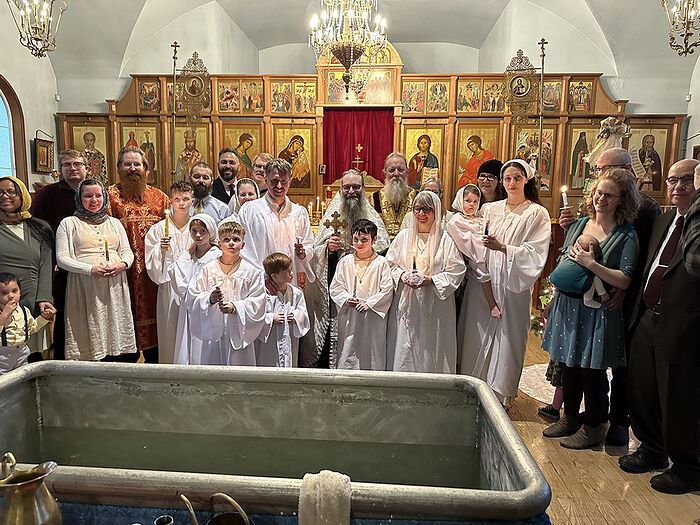
Newly illumined Orthodox Christians – Is this the future? Source


For Discussion

For readers who visit Handwritings, I would like to pose three questions:


Does your personal experience confirm or disconfirm Tom Wadsworth’s analysis of church decline?


Does your personal experience of Orthodox worship confirm or disconfirm Jared Smith’s positive assessment of Orthodoxy?


Do you think that Orthodoxy can help reverse church decline in America? How do you see that happening?

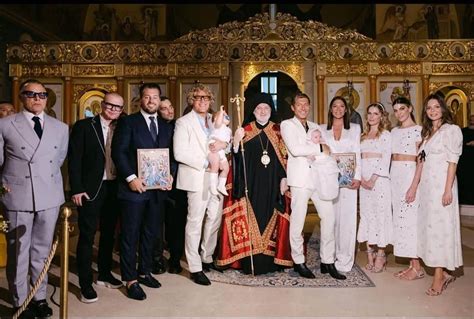
Elpidophoros the Prevaricator

Abp. Elpidophoros has accomplished a trifecta. On June 11, the archbishop of the Greek Church in the Americas once again cast pearls before swine by celebrating the divine mysteries in the synagogue of Satan, St. Bartholomew’s Episcopal Church in Manhattan. The same parish, grand in its bastard Byzantine architecture, is the epicenter of the abominable homosexual and transgender movement to queer Manhattan. Here are three remarks that fell trippingly from Elpi’s lips during the liturgy and this author’s initial reactions to them. Elpi is a prevaricator, or a damned liar, if you prefer.

St. Bart’s, Manhattan festooned with the old rainbow flag.

Elpi the Prevaricator makes bold to say, “Such connectedness with others is often feared in many Christian communities today, as if contact with those of differing perspectives might somehow pollute one’s faith.” Fiddlesticks! We all distinctly recall that it was Elpidophoros, archbishop of the GOA, who meanly refused to grant religious exemptions to the faithful who could not, for conscience’ sake, submit themselves to inoculation with an experimental serum during the pandemic. So much for Elpi’s own ability to listen to differing perspectives.

Elpi the Prevaricator boasts, “Thus, the Ecumenical Patriarch models for the Orthodox Christian Church, and for all people of good will, what it means to love your neighbor, even as you claim to love God.” What a patent lie! Bartholomew betrayed the Ukrainian Orthodox Church by unilaterally proclaiming the founding of a phony replacement entity in that cradle of Slavic Orthodoxy. Black Bart’s ultra vires meddling led to the disenfranchisement of the UOC in her motherland and the persecution of her clergy and people, and the theft of her property. History will not be kind to that schismatic, Black Bart of Istanbul.

Elpi the Prevaricator exaggerates: “The Patriarch welcomes all at the Phanar, the Sacred Center of worldwide Orthodoxy.” Not so. Orthodoxy doesn’t have a headquarters like the Vatican. Constantinople’s Phanar is a mere shadow of its former grandeur, but even at the apogee of its trajectory, it never was the “sacred center of Orthodoxy”. The hierarchical authority of the Church has always been shared by the several patriarchates and metropolises. Thank God for the decentralization, especially now when Orthodoxy groans at the heresies and schisms caused by Bartholomew and Elpidophoros.

Elpi at the “big, fat Greek gay baptism”

Papal Supremacy and the Suppression of the Latin Mass

Latin Mass Source

On 16 July 2021, Pope Francis issued the motu proprio (apostolic letter) Traditionis Custodes, which imposed severe restrictions on the celebration of the Latin Mass. This policy has upset many conservative or traditional Roman Catholics. They are aggrieved because they very much prefer the Latin Mass to the Novus Ordo Mass aka the Vatican II Mass. Many took to social media protesting the Pope’s decision. But traditional Catholics may be unaware that the recent revival of the Latin Mass was in large part due to another motu proprio Summorum Pontificum issued by Pope Benedict XVI in 2007. In other words, what the pope gives, the pope can take back.

This points to a more fundamental theological problem underlying the brouhaha over the Latin Mass—the Pope’s power to regulate the liturgical life of the Church Catholic. The central issue here is papal supremacy. Papal supremacy means the pope has ultimate authority, not just over all Christians—even non-Catholics—worldwide, but also over the manner in which they are to worship.

This throws light onto one of the fundamental differences between Roman Catholicism and Eastern Orthodoxy. Orthodoxy rejects papal supremacy. In Orthodoxy, the authority of bishops and patriarchs, even the Bishop of Rome, is contingent upon fidelity to Apostolic Tradition. The bishop receives Holy Tradition from his predecessor and is expected to transmit Holy Tradition unchanged to his successor. In the Orthodox paradigm, the bishop is under Apostolic Tradition. In Roman Catholicism, however, the pope is over Apostolic Tradition. Thus, it is asserted that the Pope can unilaterally alter the form of worship for millions of Catholics worldwide.

The scope of the pope’s authority over Roman Catholicism is breathtaking. Following Vatican II, Pope Paul VI unilaterally replaced the Latin Mass with the Novus Ordo Mass aka the Vatican II Mass. Despite scattered protests and acts of resistance, the Novus Ordo Mass has become the de facto form for Sunday worship for millions of Catholics worldwide. Traditional Catholics are scandalized by the new expressions of worship—for example, the so-called “chicken-dance Mass”—taking place under the auspices of the Novus Ordo Mass and they yearn for the solemn reverence of the pre-Vatican II Mass. In contrast to these changes, Orthodoxy worldwide for over a millennium—actually for 1500 years—continues to use the Liturgy of Saint John Chrysostom, which dates to the 400s. This has given rise to the criticism from Roman Catholics that Orthodoxy is stagnant and ossified. To which the Orthodox reply is: Thank you for the unintended compliment!

Is Roman Catholicism Still Catholic?

Traditionis Custodes has troubling implications for Orthodox-Catholic reunion. By suppressing the Latin Mass, Pope Francis has further weakened Roman Catholicism’s historic ties with the Latin Christianity of the first millennium. Through the Latin Mass, Roman Catholicism was able to claim a liturgical link to historic Catholicism of the Middle Ages, as well as Latin Christianity of the first millennium. The Latin Mass linked Roman Catholics to renowned theologians such as Thomas Aquinas and Augustine of Hippo. However, with Traditionis Custodes their link with the past has been all but severed. Reunion has become all but impossible given Orthodoxy’s adherence to Apostolic Tradition and Rome’s continued drift from its historic roots.

According to the ancient theological principle lex orandi, lex credendi (the rule of prayer is the rule of faith) the way one worships God is interrelated with the way one understands God. With the adoption of the Novus Ordo Mass, Roman Catholicism has moved further away the historic Christian Faith towards a new kind of theology. This theological drift has taken on alarming proportion by the recent controversial declaration issued by the Vatican’s Dicastery for the Doctrine of the Faith in 2023: Fiducia Supplicans, which allows Roman Catholic clergy to give a blessing to couples not considered married according to church teaching, including same-sex couples. With the apparent jettisoning of traditional liturgical forms of worship in Traditionis Custodes and the implied revision of sexual ethics in Fiducia Supplicans, one has to wonder whether the Roman Catholic church still Catholic?

For traditional Roman Catholics the recent controversies raise troubling questions about the validity of the papacy. Can papal infallibility be regarded as valid in light of the recent controversial decisions that have diverged from historic Roman Catholicism? For many devout Catholics, to question the validity of the papacy would constitute another trauma added onto the other crises of faith taking place, but these questions must be faced head on. Roman Catholics who find themselves in this horrific situation need our sympathy and prayers, not triumphalist pressure to convert to Orthodoxy.

The Filioque Again

A lot of ink has been spilled on the Internet (metaphorically speaking) in defense of the Filioque phrase. “Filioque” is the Latin rendering of “and the Son.” (See Wikipedia article: “Filioque.”) Eastern Orthodoxy rejects the insertion of the phrase “and the Son” into the section of the Nicene Creed pertaining to the Holy Spirit. In my opinion as an Orthodox Christian, Roman Catholics and their Protestant counterparts who defend the Filioque by arguing that the inserted phrase makes theological sense have missed the point. The key issue underlying the controversy over the Filioque is: Does the Pope have the authority to unilaterally alter the Niceno-Constantinopolitan Creed of 381? The Orthodox position is that only the Church Catholic through an Ecumenical Council has the authority to revise the Nicene Creed. This is what happened in 381, at the Second Ecumenical Council.

The issue here is papal supremacy. Is the pope superior to Apostolic Tradition? Because Orthodoxy holds that the pope was wrong to unilaterally insert the Filioque into the Nicene Creed, the Orthodox position is that Rome must drop the Filioque and restore the original Niceno-Constantinopolitan Creed of 381 to all its Sunday worship. Until this is done, there can be no reunion between Roman Catholicism and Eastern Orthodoxy. (It should be noted that for all the attention given to the scandal of the 1054 incident, the papal alteration of the Creed took place in 1014.)

Safe Harbor from the Storm

A Word for Distressed Roman Catholics

The recent actions by Pope Francis have caused great distress for many former Protestants who sought refuge from the confusion and tumult in Evangelicalism and mainline Protestantism. My advice to distressed Roman Catholics, both cradle and convert, is for them to take a vacation by attending a nearby Orthodox Liturgy for the next several months. Lie low, spend time in prayer and quiet reflection. Enjoy the reverent atmosphere and the ancient hymns and prayers of the early Church. And enjoy the coffee hour after the Liturgy. Tell the Orthodox Christians that you need time for healing and that you are not ready to convert. Thoughtful mature Orthodox Christians will honor your desire to be left alone.

Grieving for a Lost Past

For better or for worse, Latin Christianity and its signature rite, the Latin Mass, is gone for good. Conservative and traditionalist Roman Catholics will need time to mourn their loss. Many will need time to process their feelings of anger, loss, sadness, and emptiness, while also giving thought about their future. It is important that they understand that Eastern Orthodoxy cannot be a replacement for the Latin Mass they have lost.

It is important for Orthodox Christians to realize that they too have suffered a great loss with the recent suppression of the Latin Mass. The Latin Mass and the Latin Fathers, e.g., Ambrose of Milan, Augustine of Hippo, Leo the Great, and Gregory the Great, are part of the Orthodox heritage. As Roman Catholicism drifts further and further from its historic roots, it now falls on the Orthodox to rescue and preserve these spiritual and theological treasures for future generations.

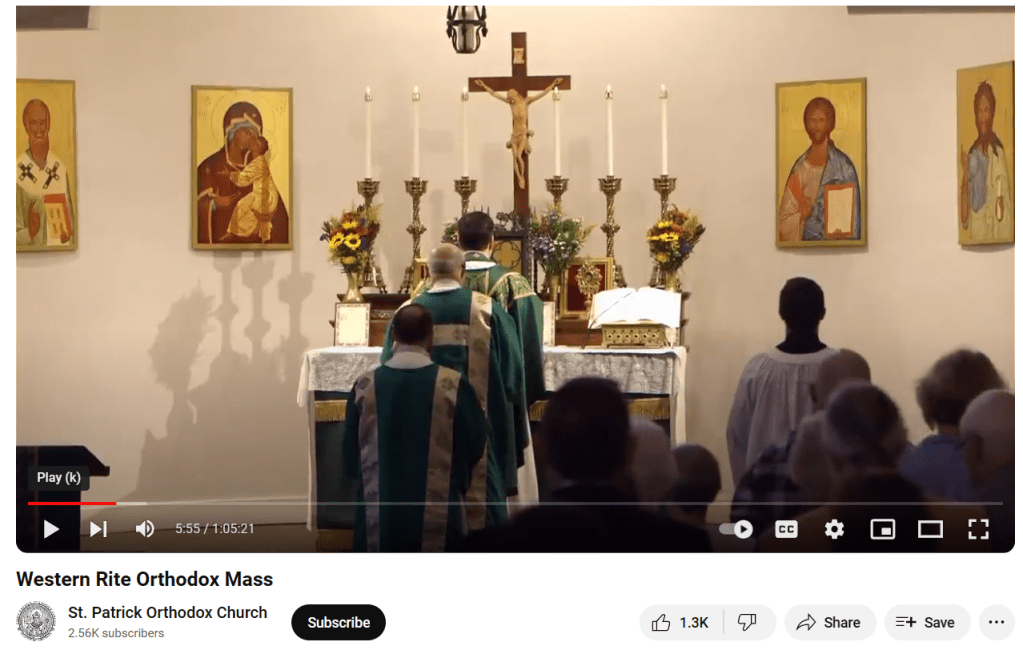
Western Rite Orthodox Mass at St. Patrick Orthodox Church, Bealeton, Virginia – Antiochian Orthodox Christian Archdiocese

Convert to Orthodoxy?

The Latin West and Orthodoxy, having been separated for a millennium, have diverged with respect to theological frameworks, devotional practices, and local customs. For distressed Roman Catholics who have lost their home, Orthodoxy can be their new home but moving into the new home will require adjustment. They cannot expect to carry their traditional Roman Catholicism into the Orthodox Church. One possibility for some is Western Rite Orthodoxy. The Western Rite is patterned after the Latin Mass but it is done in the local vernacular. So far as this author knows, there is no Latin Rite in Eastern Orthodoxy.

If traditionalist Roman Catholics desire to convert to Orthodoxy, we welcome you but you must want to become Orthodox. There is much in the Roman Catholic tradition that can be brought over into Orthodoxy, but there are elements of Roman Catholicism that are incompatible with Orthodoxy and so must be left at the door. To attempt to hold onto these problematic beliefs and practices as one seeks to become Orthodox is like a smuggler seeking to covertly transport contraband over the border. If you desire to become Orthodox, we will help you. However, if you wish to reshape Orthodoxy into something reminiscent of the Latin Rite you are longing for, we ask you to go elsewhere. We’re Orthodox, and we are not going to change.

Priest distributing the antidoron.

You are welcome to attend the Sunday Liturgy as an ecclesial refugee who needs a comforting corner for respite. We ask that you refrain from going up for Holy Communion as the Orthodox leadership have not yet changed the Church’s position on Roman Catholics receiving Holy Communion. Please don’t take this as a sign of rejection or judgment. To receive Holy Communion means that one shares the same Faith as the Orthodox Church and are under the pastoral care of an Orthodox bishop. However, after the Liturgy has been concluded you are welcome to come up and receive the antidoron (blessed bread) from the priest. The antidoron is given to the Orthodox and non-Orthodox as a sign of hospitality.

May God have mercy on us all in these troubled times.

Athenagoras

REFERENCES

Documents

Fiducia Supplicans. Vatican.va

Traditionis Custodes. Vatican.va

Summorum Pontificum. Vatican.va

Articles

Susan Benofy. “The Day the Mass Changed, How it Happened and Why — Part I.” In CatholicCulture.org

Fr. Stephen Freeman. “Belief and Practice.” Glory To God For All Things.com

Filioque” in Wikipedia.

Nicene Creed” in Britannica.com

YouTube Videos

YouTube video: “Shocking: Scandalous Chicken Dance Mass in Germany – Dr. Taylor Marshall” [48:23] 

YouTube video: “Western Rite Orthodox Mass” [1:05:21]

YouTube video: “Western Rite Orthodoxy Explained” [21:02]

Orthodoxy – Right worship for the ages of ages. Come and join us!