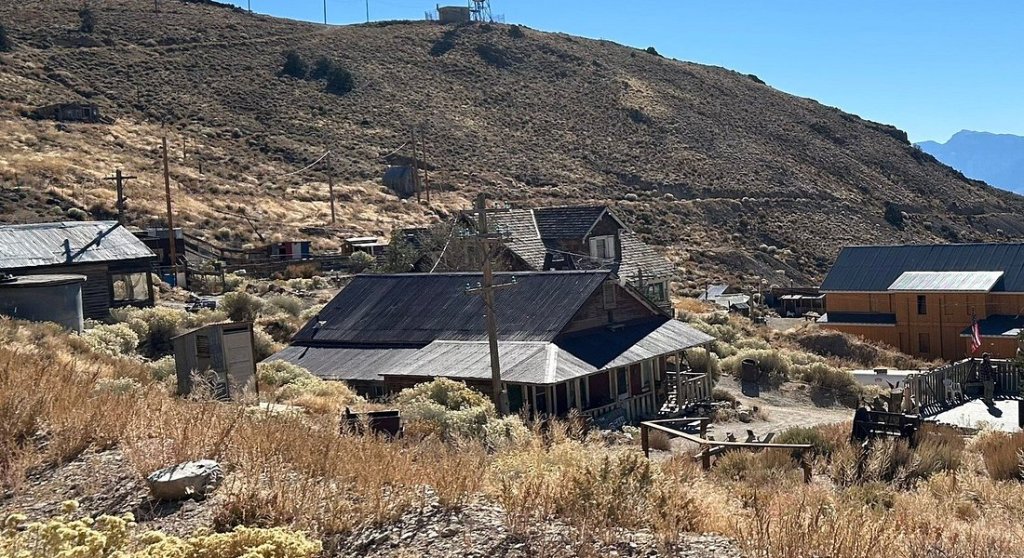
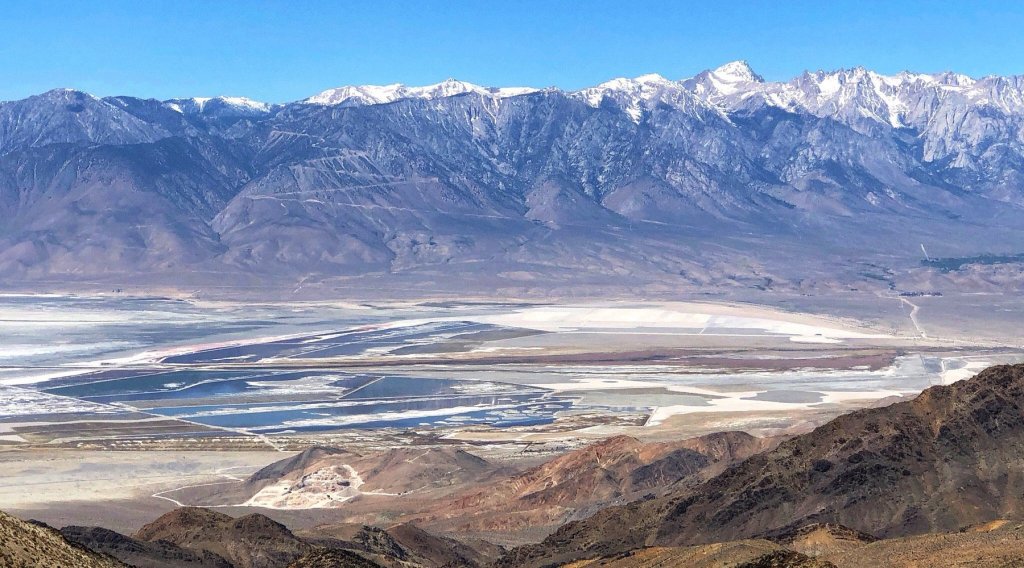
US Hwy 395 used to be a frequent route for me, up the backside of eastern California, through the high desert, past Owens Lake –or what used to be its site, once 100 sq.mi. of water, 200′ deep, with laden barges, now a dry bed of salt & toxic wind-born dust– & past a state historical marker directing to old charcoal kilns that made me always think of my hero, St Alexander the Charcoal-Burner, Bishop & Martyr, as I headed to or from the town of Bishop! Those kilns kept the smeltery at Cerro Gordo blasting for decades, producing a river of silver flowing on down to Los Angeles that made a city possible there, before silver screens were even known, before the water of the lake was hijacked…. In my years in Owens Valley, I never ventured up the long, steep, gravel road to Cerro Cordo, quite desolate in my day. [BTW, Does anyone know if he is the ‘Alexander’ in the old Roman Canon among its forty named martyrs?]

Recently I got the book, “Ghost Town Living” by the new “Mayor” of Cerro Gordo, one Brent Underwood. It was a thrill to read his modern Odyssey, poetically set out in four sections, Earth, Water, Fire, & Air. –You’ll easily know the roots of a classical mind! So it does not come as a complete surprise when traces of liturgy turn up in his digs, musings, & adventures.
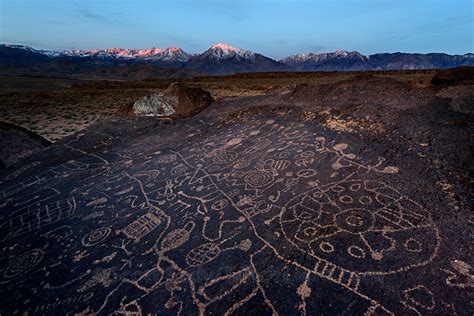
Petroglyphs are part of the desert landscape. Some tell of a “Great Pluvial Period,” when Death Valley held over 700 ft of water; it flowed out then to the Colorado River, & tribes of people hunted animals now extinct on its shores. Owens Lake was part of a watercourse that flowed into it. That’s not part of Brent’s epic, but it does give background for his reference to some of the area’s hidden petroglyphs, some dating more than 8-10,000BC!
He writes, “There are some who believe that the painters were not honoring themselves with the paintings but their prey, imagining that by sacrificing their most precious commodities, food & warmth & medicine, {& time,} to etch the image of these creatures into the stone, they were granting these creatures immortality, & guaranteeing that the next harvest would also be bountiful. In that interpretation, it’s not the painting but the *ACT OF PAINTING* that’s sacramental. They were ritually participating in that ongoing act of Creation, … *The ritual was what mattered.* The paintings that we find now are just an echo of that ritual, like the reverberation in a church right after the organ has finished.” [caps mine]
It strikes me that Brent has touched something fundamental about the painting of the holy Ikons. So I wanted to share his inspiration & insight with this readership, and encourage others to investigate his labor of love and restoration from his kind of “desert skete” in eastern California. Some will find his YouTube series, “Ghost Town Living,” also of beauty and value.
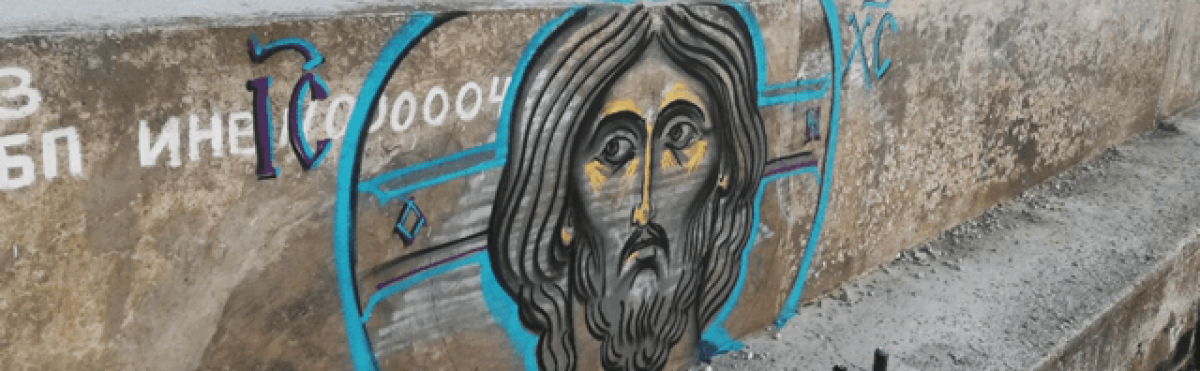
An Ikon-Writer uses strokes much like a scribe practices the forms of Letters in copying a Gospel text, let’s say. The Scribe strives to be “letter-perfect” in copying the Gospel, to pass on EXACTLY the Sacred Text. So, too, the Ikon-Writer. “Free Invention” has no real place, though Inspiration is not ruled out. Prayer & Fasting, & humble submission, guide a good Ikon-Writer away from deviancies of that sort. The Holy Spirit can then bring true Freshness to the work that ‘mere Pride’ will not!
____________________________________________
Guest contributor, Christopher P. Kelley, is an Anglican priest who received his seminary training at the General Theological Seminary in New York. Fr. Kelley was ordained in 1974 by the late Lord Michael Ramsay, 100th Archbishop of Canterbury. Fr. Kelley later did work for a doctorate in Byzantine Christian studies with an interest in Biblical archeology and iconography.
 Handwritings on the Wall