I Went to School with Carlton Pearson

I suppose the title of this article will sound like name-dropping to one or two former charismatics out there, but that isn’t my intention in the least. I am not trying to jack up my reputation by associating myself with an erstwhile Christian rock star. There would be no nexus between Carlton Pearson and me if we had not gone to a small Christian college together. I bring him up because a renowned yet controversial Pentecostal preacher, pastor and singer, Pearson died of cancer last November at the relatively young age of seventy.
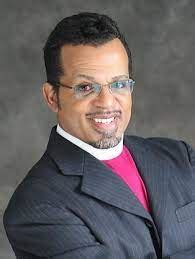
Bp. Carlton Pearson

This is an Orthodox blog, so I doubt if many of our readers have ever heard of Bp. Carlton Pearson. He was the co-founder of a wildly successful megachurch in the Bible-belt city of Tulsa, Oklahoma. Pearson was hardly an Orthodox believer, or a canonical bishop, but there is a connection between him and me – we were together at Oral Roberts University. Carlton matriculated in the fall of 1971, a year before me. I hardly knew the upperclassman, but I saw him on campus from time to time and I remember a sermon that he preached at one of the semi-weekly chapel sessions. It was called the “Shepherd’s Bag.” As one who can barely remember what his priest talked about last Sunday morning, I certainly won’t even try to recall what was in the shepherd’s bag, but I do remember the talk’s catchy title.

Carlton himself was catchy. He had the most flamboyant personality of anyone on campus, even more than Oral Roberts himself, the televangelist and founder of his eponymous university. Carlton grew up in his father’s black Pentecostal church in San Diego. At ORU, Carlton sang with the exuberant World Action Singers, the celebrities of the student body who performed to a nationwide audience with Oral Roberts at his quarterly primetime television specials. Oral, who was part Cherokee, identified with ethnic minorities, so he took a liking to Carlton. You might say that Oral played favorites, but in the Pentecostal world effervescence of personality is de rigueur. Richard Roberts was Oral’s biological son, of course, but according to Carlton, Oral claimed him as his black son. They were tight and did a lot of ministering together.
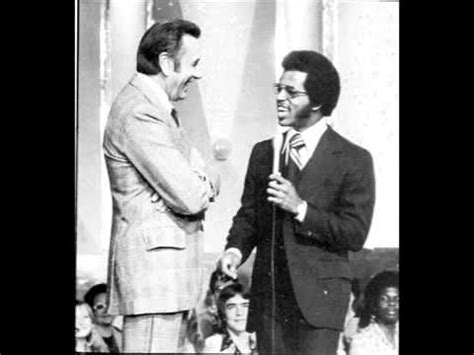
Oral Roberts & Carlton Pearson in the early 1970s

Carlton never graduated from ORU. Instead, he and a white classmate of his named Gary McIntosh started a church on the mostly-white south side of Tulsa in 1977 called Higher Dimensions. This start-up went from 75 to 6,000 in short order. Carlton often appeared in shows on the Trinity Broadcasting Network, where he achieved national exposure. He was a guest preacher the world over and became the recipient of several honorary doctoral degrees. He preached up a storm in a way that one imagines his fathers before him had done, or that Oral himself preached. The contemporary Christian rock music at Higher Dimensions was rowdy. Carlton said his band was “slammin’ it”. The congregation was racially integrated on purpose, beginning with the black and white clerical staff, and people of all shades gathered at Higher Dimensions. Times were good in Tulsa.

They were very good… until Pearson had an epiphany. When his two children were small, Pearson witnessed on television the suffering of the victims of the civil wars in Uganda and Rwanda. He saw the suffering of the people around him. It seemed to him that that there was no hell other than the one right here on Earth. If there is no hell, there is no danger of anyone falling into it. There is no reason to preach the Gospel to save the heathen from it. Jesus Christ, the God of love, had already accomplished the redemptive work for everyone everywhere, so there was no reason for anyone anywhere to repent and believe. Pearson had now embraced the age-old heresy of Universalism. Uh oh.

When he started to preach this newly-inspired old “gospel of inclusion”, Pearson suddenly lost his people. Steeped in the bible and sensitive to heresy, his evangelical and pentecostal congregation shrank in number to 200 in no time. Pearson could no longer pay his staff and he lost the building that was their church home. The other bishops of the black Pentecostal Church of God in Christ upbraided Pearson for his error. Oral Roberts himself, now advanced in years, warned him to turn away from this dangerous heresy. Regardless, Pearson would not relent.

Pearson on the radio

Now, one might ask what Carlton Pearson’s story has to do with me and my Orthodoxy? I was raised a stuffy Episcopalian, but I had a born-again experience while in high school. I started to go to “meetings” and Bible studies with charismatic Mennonites and long-haired Jesus People. That’s what led me to apply for entry into ORU. Those were four of the best years of my life. Fast forward half a century. I’m a former Anglican priest who is now fortunate to be an Orthodox layman. Having experienced Pentecostalism and the Charismatic Movement, and having ultimately converted to the Orthodox Faith, I can look back on Pearson’s saga from an Orthodox mindset and view it as a cautionary tale.

Two things struck me about Carlton Pearson’s very public fall from grace. He seems to have known nothing about the weighty authority of the Orthodox and Catholic Church’s Sacred Tradition. Or, if he was aware of it, he dismissed it. The scant tradition upon which Pearson could base his uber-vocal ministry was the Sola Scriptura of Calvinism spiced with the evanescent rhema, or supposéd utterance of the Holy Ghost. This Pearson expressed in an electrified spirituality, absolutely individual and forever loud and fresh. A successful preacher in this Pentecostal milieu is liable to consider his innovative interpretation of Scripture to be the True Way. As we can see, Pearson did just that.

Pearson had allowed himself unwittingly to build a large-scale personality cult that centered upon himself. He became rich and famous. He was known and praised by the stars of the Pentecostal world. By contrast, we Orthodox, in our quasi-monastic observance of self-abnegation, are taught to keep a low profile. Flashy, pop-music performances and sweaty preaching are entirely foreign to our religious custom. They’re ephemeral and shallow. It’s a shame – no, it’s tragic – that such an energetic minister as Pearson, once distraught by the suffering of his racial kin and skeptical that a loving God could assign anyone to eternal suffering worse than that, did not search for the truth of controversial soteriological issues in the rich and clear consensus of Orthodoxy when it was available to him if he had only sought for it. The trouble with Pearson’s mindset was that it was inspired by the emotions of subjective experience, not the unchanging dogmas of the ancient Church. He soon started to normalize gay relationships on the basis of the vague doctrine of love to which his theology devolved. How does God square away the soul of a minister who has so blatantly and abruptly abandoned Church teachings on eternal damnation?

It’s not our place to question whether the soul of Carlton Pearson has landed in the very hell whose existence he so adamantly denied. Christian charity would prevent us from wishing that fate upon him. I suffered a stroke not long after Pearson’s death and I’ll soon turn seventy myself, so the issue of eternal life with God versus eternal separation from God is now front and center for me and people of my generation. Great Lent is a good time for us to sober up and take stock of our lives.

Papal Supremacy and the Suppression of the Latin Mass

Latin Mass Source

On 16 July 2021, Pope Francis issued the motu proprio (apostolic letter) Traditionis Custodes, which imposed severe restrictions on the celebration of the Latin Mass. This policy has upset many conservative or traditional Roman Catholics. They are aggrieved because they very much prefer the Latin Mass to the Novus Ordo Mass aka the Vatican II Mass. Many took to social media protesting the Pope’s decision. But traditional Catholics may be unaware that the recent revival of the Latin Mass was in large part due to another motu proprio Summorum Pontificum issued by Pope Benedict XVI in 2007. In other words, what the pope gives, the pope can take back.

This points to a more fundamental theological problem underlying the brouhaha over the Latin Mass—the Pope’s power to regulate the liturgical life of the Church Catholic. The central issue here is papal supremacy. Papal supremacy means the pope has ultimate authority, not just over all Christians—even non-Catholics—worldwide, but also over the manner in which they are to worship.

This throws light onto one of the fundamental differences between Roman Catholicism and Eastern Orthodoxy. Orthodoxy rejects papal supremacy. In Orthodoxy, the authority of bishops and patriarchs, even the Bishop of Rome, is contingent upon fidelity to Apostolic Tradition. The bishop receives Holy Tradition from his predecessor and is expected to transmit Holy Tradition unchanged to his successor. In the Orthodox paradigm, the bishop is under Apostolic Tradition. In Roman Catholicism, however, the pope is over Apostolic Tradition. Thus, it is asserted that the Pope can unilaterally alter the form of worship for millions of Catholics worldwide.

The scope of the pope’s authority over Roman Catholicism is breathtaking. Following Vatican II, Pope Paul VI unilaterally replaced the Latin Mass with the Novus Ordo Mass aka the Vatican II Mass. Despite scattered protests and acts of resistance, the Novus Ordo Mass has become the de facto form for Sunday worship for millions of Catholics worldwide. Traditional Catholics are scandalized by the new expressions of worship—for example, the so-called “chicken-dance Mass”—taking place under the auspices of the Novus Ordo Mass and they yearn for the solemn reverence of the pre-Vatican II Mass. In contrast to these changes, Orthodoxy worldwide for over a millennium—actually for 1500 years—continues to use the Liturgy of Saint John Chrysostom, which dates to the 400s. This has given rise to the criticism from Roman Catholics that Orthodoxy is stagnant and ossified. To which the Orthodox reply is: Thank you for the unintended compliment!

Is Roman Catholicism Still Catholic?

Traditionis Custodes has troubling implications for Orthodox-Catholic reunion. By suppressing the Latin Mass, Pope Francis has further weakened Roman Catholicism’s historic ties with the Latin Christianity of the first millennium. Through the Latin Mass, Roman Catholicism was able to claim a liturgical link to historic Catholicism of the Middle Ages, as well as Latin Christianity of the first millennium. The Latin Mass linked Roman Catholics to renowned theologians such as Thomas Aquinas and Augustine of Hippo. However, with Traditionis Custodes their link with the past has been all but severed. Reunion has become all but impossible given Orthodoxy’s adherence to Apostolic Tradition and Rome’s continued drift from its historic roots.

According to the ancient theological principle lex orandi, lex credendi (the rule of prayer is the rule of faith) the way one worships God is interrelated with the way one understands God. With the adoption of the Novus Ordo Mass, Roman Catholicism has moved further away the historic Christian Faith towards a new kind of theology. This theological drift has taken on alarming proportion by the recent controversial declaration issued by the Vatican’s Dicastery for the Doctrine of the Faith in 2023: Fiducia Supplicans, which allows Roman Catholic clergy to give a blessing to couples not considered married according to church teaching, including same-sex couples. With the apparent jettisoning of traditional liturgical forms of worship in Traditionis Custodes and the implied revision of sexual ethics in Fiducia Supplicans, one has to wonder whether the Roman Catholic church still Catholic?

For traditional Roman Catholics the recent controversies raise troubling questions about the validity of the papacy. Can papal infallibility be regarded as valid in light of the recent controversial decisions that have diverged from historic Roman Catholicism? For many devout Catholics, to question the validity of the papacy would constitute another trauma added onto the other crises of faith taking place, but these questions must be faced head on. Roman Catholics who find themselves in this horrific situation need our sympathy and prayers, not triumphalist pressure to convert to Orthodoxy.

The Filioque Again

A lot of ink has been spilled on the Internet (metaphorically speaking) in defense of the Filioque phrase. “Filioque” is the Latin rendering of “and the Son.” (See Wikipedia article: “Filioque.”) Eastern Orthodoxy rejects the insertion of the phrase “and the Son” into the section of the Nicene Creed pertaining to the Holy Spirit. In my opinion as an Orthodox Christian, Roman Catholics and their Protestant counterparts who defend the Filioque by arguing that the inserted phrase makes theological sense have missed the point. The key issue underlying the controversy over the Filioque is: Does the Pope have the authority to unilaterally alter the Niceno-Constantinopolitan Creed of 381? The Orthodox position is that only the Church Catholic through an Ecumenical Council has the authority to revise the Nicene Creed. This is what happened in 381, at the Second Ecumenical Council.

The issue here is papal supremacy. Is the pope superior to Apostolic Tradition? Because Orthodoxy holds that the pope was wrong to unilaterally insert the Filioque into the Nicene Creed, the Orthodox position is that Rome must drop the Filioque and restore the original Niceno-Constantinopolitan Creed of 381 to all its Sunday worship. Until this is done, there can be no reunion between Roman Catholicism and Eastern Orthodoxy. (It should be noted that for all the attention given to the scandal of the 1054 incident, the papal alteration of the Creed took place in 1014.)

Safe Harbor from the Storm

A Word for Distressed Roman Catholics

The recent actions by Pope Francis have caused great distress for many former Protestants who sought refuge from the confusion and tumult in Evangelicalism and mainline Protestantism. My advice to distressed Roman Catholics, both cradle and convert, is for them to take a vacation by attending a nearby Orthodox Liturgy for the next several months. Lie low, spend time in prayer and quiet reflection. Enjoy the reverent atmosphere and the ancient hymns and prayers of the early Church. And enjoy the coffee hour after the Liturgy. Tell the Orthodox Christians that you need time for healing and that you are not ready to convert. Thoughtful mature Orthodox Christians will honor your desire to be left alone.

Grieving for a Lost Past

For better or for worse, Latin Christianity and its signature rite, the Latin Mass, is gone for good. Conservative and traditionalist Roman Catholics will need time to mourn their loss. Many will need time to process their feelings of anger, loss, sadness, and emptiness, while also giving thought about their future. It is important that they understand that Eastern Orthodoxy cannot be a replacement for the Latin Mass they have lost.

It is important for Orthodox Christians to realize that they too have suffered a great loss with the recent suppression of the Latin Mass. The Latin Mass and the Latin Fathers, e.g., Ambrose of Milan, Augustine of Hippo, Leo the Great, and Gregory the Great, are part of the Orthodox heritage. As Roman Catholicism drifts further and further from its historic roots, it now falls on the Orthodox to rescue and preserve these spiritual and theological treasures for future generations.

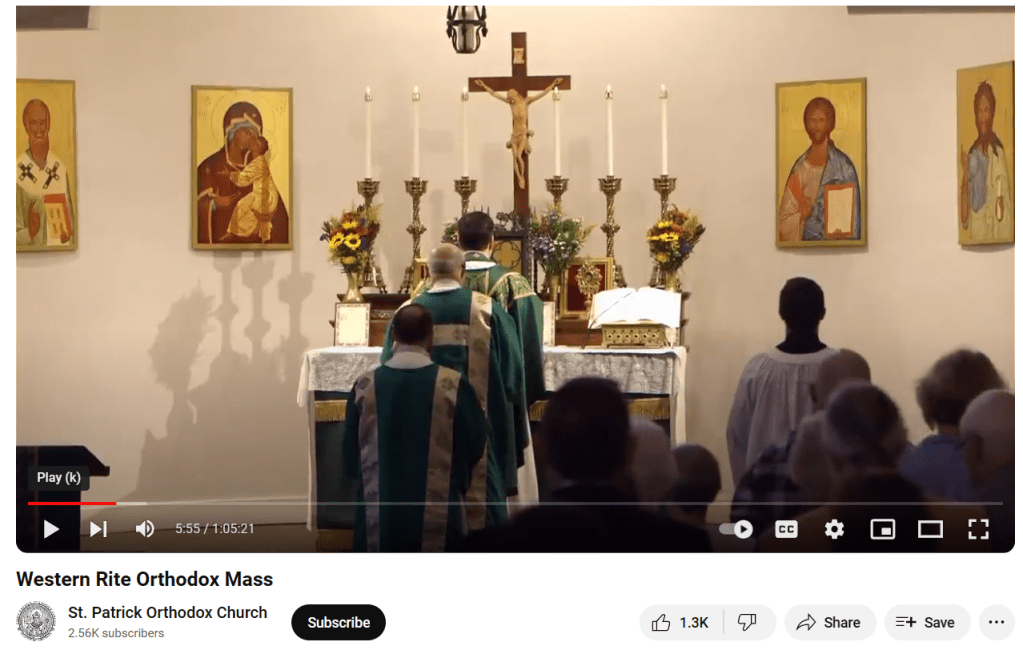
Western Rite Orthodox Mass at St. Patrick Orthodox Church, Bealeton, Virginia – Antiochian Orthodox Christian Archdiocese

Convert to Orthodoxy?

The Latin West and Orthodoxy, having been separated for a millennium, have diverged with respect to theological frameworks, devotional practices, and local customs. For distressed Roman Catholics who have lost their home, Orthodoxy can be their new home but moving into the new home will require adjustment. They cannot expect to carry their traditional Roman Catholicism into the Orthodox Church. One possibility for some is Western Rite Orthodoxy. The Western Rite is patterned after the Latin Mass but it is done in the local vernacular. So far as this author knows, there is no Latin Rite in Eastern Orthodoxy.

If traditionalist Roman Catholics desire to convert to Orthodoxy, we welcome you but you must want to become Orthodox. There is much in the Roman Catholic tradition that can be brought over into Orthodoxy, but there are elements of Roman Catholicism that are incompatible with Orthodoxy and so must be left at the door. To attempt to hold onto these problematic beliefs and practices as one seeks to become Orthodox is like a smuggler seeking to covertly transport contraband over the border. If you desire to become Orthodox, we will help you. However, if you wish to reshape Orthodoxy into something reminiscent of the Latin Rite you are longing for, we ask you to go elsewhere. We’re Orthodox, and we are not going to change.

Priest distributing the antidoron.

You are welcome to attend the Sunday Liturgy as an ecclesial refugee who needs a comforting corner for respite. We ask that you refrain from going up for Holy Communion as the Orthodox leadership have not yet changed the Church’s position on Roman Catholics receiving Holy Communion. Please don’t take this as a sign of rejection or judgment. To receive Holy Communion means that one shares the same Faith as the Orthodox Church and are under the pastoral care of an Orthodox bishop. However, after the Liturgy has been concluded you are welcome to come up and receive the antidoron (blessed bread) from the priest. The antidoron is given to the Orthodox and non-Orthodox as a sign of hospitality.

May God have mercy on us all in these troubled times.

Athenagoras

REFERENCES

Documents

Fiducia Supplicans. Vatican.va

Traditionis Custodes. Vatican.va

Summorum Pontificum. Vatican.va

Articles

Susan Benofy. “The Day the Mass Changed, How it Happened and Why — Part I.” In CatholicCulture.org

Fr. Stephen Freeman. “Belief and Practice.” Glory To God For All Things.com

Filioque” in Wikipedia.

Nicene Creed” in Britannica.com

YouTube Videos

YouTube video: “Shocking: Scandalous Chicken Dance Mass in Germany – Dr. Taylor Marshall” [48:23] 

YouTube video: “Western Rite Orthodox Mass” [1:05:21]

YouTube video: “Western Rite Orthodoxy Explained” [21:02]

Orthodoxy – Right worship for the ages of ages. Come and join us!