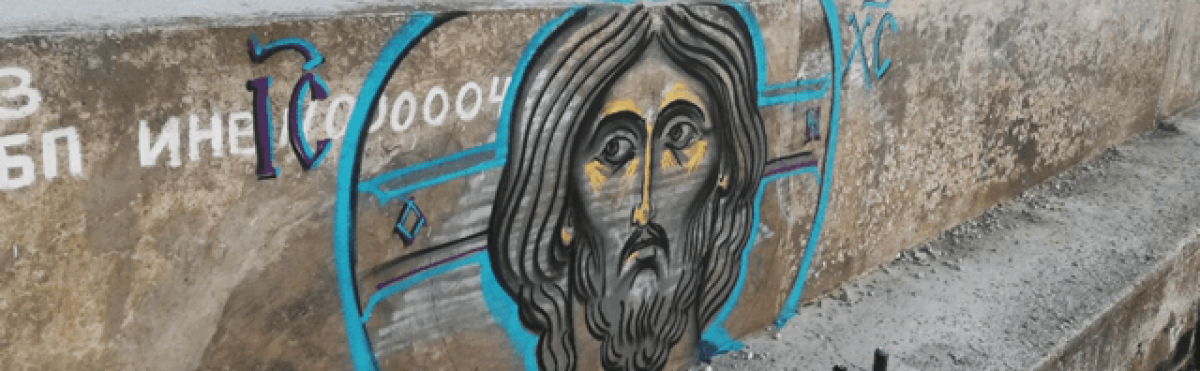
Not Rushing to Premature Ecumenism

It is a widely known fact that Roman Catholicism and Orthodoxy celebrate Easter on different days. Some years they celebrate Easter one week apart. Some years, for example in 2024, their Easter celebration is more than a month apart. In 2024, Roman Catholics celebrated Easter on March 31, while the Orthodox will be celebrating Easter (aka Pascha) at Midnight May 4.
The disparity between Western Easter and Orthodox Easter has led some to deplore the differences and call for both traditions to agree on a common date. Recently, on 31 March 2024, Patriarch Bartholomew in his homily expressed his desire that beginning in 2025 both Roman Catholics and Orthodox would celebrate Easter on the same day.
But also from this position we extend a heartfelt greeting of love to all Christians around the world who celebrate Holy Easter today. We beseech the Lord of Glory that the forthcoming Easter celebration next year will not merely be a fortuitous occurrence, but rather the beginning of a unified date for its observance by both Eastern and Western Christianity.
This aspiration is particularly significant in light of the upcoming 1700th anniversary in 2025, marking the convening of the First Ecumenical Synod in Nicaea. Among its pivotal discussions was the matter of establishing a common timeframe for the Easter festivities. We are optimistic, as there is goodwill and willingness on both sides. Because, indeed, it is a scandal to celebrate separately the unique event of the one Resurrection of the One Lord! [Source, Emphasis added.]
Apparently, Patriarch Bartholomew is hoping that by 2025 both Roman Catholicism and Orthodoxy will have agreed on a common date for Easter and that after 2025 there will no longer be different dates for celebrating it. In addition, he reminds his listeners that 2025 will mark the 1700th anniversary of the First Ecumenical Council (325). Nicea I was a landmark event in which bishops came from all over the Roman Empire to proclaim their common faith in Jesus Christ, the incarnate Son of God who came to save humankind.
Rejecting Cosmetic Unity
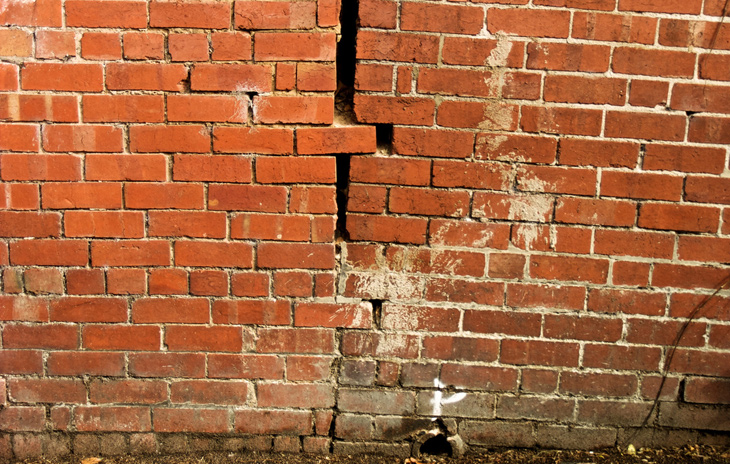
All Orthodox Christians ought to seek the ending of the schism between Roman Catholicism and Orthodoxy. However, we are to guard against changing Holy Tradition for the sake of cosmetic unity. To agree on a common date for Easter while overlooking significant issues arising from the Great Schism of 1054 would be rushing to premature ecumenism. It would be like a contractor painting over the cracks in the wall of a house after a devastating earthquake. To paint over the cracks and certify a severely damaged building as inhabitable is not only highly irresponsible, it is fraudulent behavior that verges on criminality.
The Great Schism of 1054 and its Aftermath
For the first millennium, Christian unity was manifested in such markers as the Eucharist, the canonical Scriptures, the Church Fathers, the Ecumenical Councils, the Nicene Creed, the episcopacy, and the Pentarchy. The Pentarchy was comprised of the five patriarchates of Rome, Constantinople, Alexandria, Antioch, and Jerusalem. Unlike Protestantism which believes that the unity of the Universal Church is an invisible, spiritual unity, Christians in the first millennium believed in a visible, tangible Universal Church.
Christian unity suffered a major setback when Pope Benedict VIII unilaterally inserted the Filioque phrase “and the Son” into the Niceno-Constantinopolitan Creed (381) in 1014. By 1054, the papal legate, Cardinal Humbert, excommunicated the patriarch of Constantinople, Michael Cerularius. This resulted in the mutual excommunications by both sides. While some have exaggerated the fracas of 1054, it serves as a reference point for when Rome and the Eastern churches went their separate ways. It is worth noting that it was not just Constantinople that rejected the Filioque, the other patriarchates: Alexandria, Antioch, and Jerusalem likewise objected to the Filioque.
The insertion of the Filioque was a highly significant move by the pope. First, it implied that the pope had an authority equivalent to the Ecumenical Councils (Nicea I {325} and Constantinople 1 {381}) to define the universal creed. This is contrary to Orthodox ecclesiology, which holds that the highest ecclesial authority resides in the ecumenical councils. When a council is convened, the bishops, as successors to the Apostles, gather together as representatives of the Church Catholic. Second, the insertion of the Filioque implied the pope’s universal supremacy over all Christians in matters of faith and practice. Papal supremacy is implicit in the Filioque. It would take several centuries until papal infallibility was explicitly promulgated by the First Vatican Council (1869-1870). Third, the Filioque has significant implications for the doctrine of the Trinity that many Orthodox would consider dubious or even heretical. For the Orthodox, it is significant that the Filioque does not have the general support of the Church Fathers.
Steps Towards Authentic Unity
Patriarch Bartholomew rightfully deplores the calendar differences between Roman Catholicism and Orthodoxy. However, it is significant that he has not said much about the need to resolve the issues stemming from the Schism of 1054. Until these issues are resolved, talk of a common Easter date is premature. Agreeing upon a common date for Easter without attending to the deeper matters of faith and practice would be more of a public relations (PR) stunt than a genuine healing of schism.
Below are some suggestions for steps that can be taken to reach genuine reunification between Roman Catholicism and Orthodoxy. Basically, it calls for both sides to return to their shared roots in Apostolic Tradition, e.g., the Seven Ecumenical Councils, the Church Fathers, and the historic liturgies.
1. Drop the Filioque
The first step towards reunification would be for Roman Catholicism to return to the original Niceno-Constantinopolitan Creed (381) as the normative creed for its Sunday Mass in all parishes worldwide. The suspension of the Filioque in the Sunday Mass worldwide would show that Pope Francis is serious about reunification with Orthodoxy. It has been the practice that when Roman Catholics and Orthodox come together to recite the Nicene Creed with the Filioque omitted for that occasion. Notwithstanding, such actions are more PR gestures than serious attempts to heal the schism between the two traditions. Genuine reunification entails the eschewing of innovation and the restoration of historic liturgical practices.
The second step would be for Pope Francis to announce that the unilateral insertion of the Filioque was a mistake and that saying the Filioque is to be suspended until a universal church council (including the historic Pentarchy and other autocephalous jurisdictions) rule on the Filioque. It is imperative that the Church Catholic come to an agreement on the Filioque, whether to adopt it or exclude it.
Many staunch Roman Catholics, in their interaction with Orthodox Christians, have said much in defense of the double-procession of the Holy Spirit, all the while misunderstanding the differences between the two traditions. Where many Roman Catholics approach the Filioque in terms of systematic theology, for the Orthodox, the Filioque controversy is fundamentally about liturgical theology: that is, our worship of the Triune God in the Liturgy. The insertion of the Filioque has serious implications for the way in which we understand the Trinity. So, while Roman Catholics and Orthodox Christians are reciting nearly identical versions of the Nicene Creed, they are articulating rather different understandings of the Trinity. This difference in wording is a far more serious matter than the discrepant Easter dates that troubles Patriarch Bartholomew.
2. Repudiate Papal Supremacy
For Roman Catholics to reunite with the Orthodox, the Bishop of Rome and the Vatican would need to formally repudiate papal supremacy and formally endorse the conciliar understanding of the Church Catholic. Historically, Orthodoxy has accepted papal primacy but rejected papal supremacy. To put it another way, Orthodoxy accepts the bishop of Rome as first among other bishops, but not as superior in rank or authority to the other bishops. Once the bishop of Rome has formally repudiated papal supremacy, the details of church administration and canon law can be worked out by both sides.
3. Formally Assess the Novus Ordo Mass
Almost a thousand years have passed since the Great Schism, since then Roman Catholicism has undergone many changes in its theology and worship. When an Eastern Orthodox Christian visits a Coptic Orthodox Liturgy, he will see and hear much that is familiar to his home parish. However, when he visits a Catholic Mass, especially a Novus Ordo Mass, he will be surprised and even shocked by how different the Novus Ordo Mass is from the Orthodox liturgy.
The Novus Ordo Mass (aka the Vatican II Mass, aka the Mass of Paul VI), which originated in the 1960s and the 1970s, is a striking departure from the historic liturgies. Many Catholics have complained about the lack of reverence and shocking innovations in the Novus Ordo Mass. Of concern to the Orthodox is the recent suppression of the traditional Latin Mass by Pope Francis. To Orthodox Christians, it appears that Roman Catholicism has abandoned its historic liturgical heritage for one based on modern innovation. Examples of liturgical innovation include: the inclusion of secular songs such as “You Got a Friend” or “Stairway to Heaven,” the introduction of lay Eucharistic ministers to distribute the consecrated Host, and the priest ceasing to pray ad orientem (facing East).
The ultimate goal of Catholic-Orthodox reunification is the Eucharist, but is that possible if the Novus Ordo Mass is incompatible with the ancient liturgies of Saint John Chrysostom and Saint Basil the Great? It is suggested that if the bishop of Rome were to implement the first two steps recommended above (i.e., suspend the use of the Filioque in Sunday worship and formally renounce papal supremacy), that the Orthodox hierarchs convene a pan-Orthodox synod that will examine the validity of the Novus Ordo Mass. The Novus Ordo Mass is not necessarily heretical, but it is a striking innovation that appears to diverge from historic Christian worship. This is an issue that cannot be ignored. A simpler approach would be for the Roman Catholic church to lay aside the Novus Ordo Mass and return to the historic Latin Mass, duly translated into the vernacular, as the normative form of Sunday worship worldwide.
These three suggestions are just initial steps that would demonstrate that Pope Francis and his fellow bishops do sincerely desire reunification with Orthodoxy. Until Pope Francis and the Vatican suspend the use of the Filioque from the Sunday Mass worldwide, all talk about reunification between the two traditions is premature. One has to wonder why Patriarch Bartholomew has not given greater attention to the Filioque in his pursuit of closer ties with Rome. It is incumbent upon the Orthodox laity to humbly request that our priests and bishops not succumb to premature ecumenism and that the local Orthodox clergy relay their concerns to their respective primates. A fundamental component of Orthodox ecclesiology is that the whole people of God, from the bishop down to the priest and deacons, and to the laity, are responsible for safeguarding Holy Tradition. It is the job of ordained clergy, bishops and priests, to safeguard Holy Tradition. The laity should speak out only if it appears that attempts are being made to tamper with Holy Tradition.
Avoiding False Unity
Patriarch Bartholomew has been a very vocal advocate for reunification with Rome. In late 2019, he informed the monks of Mount Athos that there are no dogmatic differences between Orthodoxy and Roman Catholicism, and that reunion is inevitable (See the website OrthodoxChristianity). However, his optimism may be premature. There is very little evidence that Pope Francis is seeking to undo the tragic legacy of the 1054 Schism. It is concerning that Patriarch Bartholomew has not taken a stronger stand on the Filioque and papal supremacy. Until then, the best stance for the Orthodox to take with respect to reunion with Roman Catholicism is to reiterate: We are Orthodox, and we hold to Holy Tradition without change.
The temptation for many enthusiastic ecumenists is to sweep under the rug the hugely significant issues that stand between Roman Catholics and Orthodox. However, doing that would entail the abandonment of Holy Tradition. If Roman Catholicism wishes to return to its patristic roots, we Orthodox should by all means help them return to Pre-Schism Christianity; but we cannot and must not pawn off the family heirloom for counterfeit unity.
It may be that this author protests too much. However, Patriarch Bartholomew’s recent words are cause for concern. As we look to 2025, we should be alert for PR campaigns pressuring the Orthodox faithful into false unity with Roman Catholics. It is important that the Orthodox laity become familiar with the core beliefs and practices of Orthodoxy. A solid understanding of Holy Tradition is key to obeying the Apostle Paul’s admonition in 2 Thessalonians:
Therefore, brethren, stand fast and hold the traditions which you were taught, whether by word or epistle. (2 Thes. 2:15; emphasis added)
To be able to stand fast means to not easily be pushed around and to hold fast to something means that it cannot be easily yanked out of one’s grip. In this context, we need Orthodox Christians who are familiar with the Holy Tradition. If we are unfamiliar with the teachings and practices of Orthodoxy, we will be susceptible to being bamboozled by the polished rhetoric of ecumenical enthusiasts, whether Orthodox or Roman Catholic. We need a united front against the false ecumenists.
In opposing false ecumenism, we also need to guard against the spirit of spiritual pride and judgmentalism. We should seek to develop the Orthodox phronema (way of thinking) of humility and charity. And, we should seek the prayers of the great saints such as Irenaeus of Lyons, Vincent of Lérins, Mark of Ephesus, and Justin Popovich. Let us emulate the spirit of humble service exemplified by these saints.
I would like to close by quoting another Orthodox patriarch, Philaret of Moscow. In 1965, when the patriarch of Constantinople, Athenagoras, met with Pope Paul VI to lift the mutual excommunications of 1054, Philaret wrote to express his concerns.
No union of the Roman Church with us is possible until it renounces its new doctrines, and no communion in prayer can be restored with it without a decision of all churches, which, however, can hardly be possible before the liberation of the Church of Russia which at present has to live in catacombs. [Source.]
With the ending of the Cold War, the Russian Church has emerged from its catacombs. This has allowed the patriarchate of Moscow to play a more prominent role in the Orthodox world. Orthodoxy’s conciliar nature means that we are not totally dependent on Constantinople. If we suspect that one patriarchate is in danger of straying from Holy Tradition, we can turn to other patriarchates for guidance. While Catholic-Orthodox reunification is highly desirable, it is imperative that Constantinople not seek reunification with Rome without the consent and approval of Moscow and the other patriarchs and primates. True Church unity requires fidelity to Holy Tradition. The Apostle Paul wrote to Bishop Timothy:
Hold fast the pattern of sound words which you have heard from me, in faith and love which are in Christ Jesus. That good thing which was committed to you, keep by the Holy Spirit who dwells in us. (2 Tim. 1:13-14)
Let us heed the words of the Apostle Paul and emulate the example of Bishop Timothy.
Athenagoras
References
Britannica. “East-West Schism.“
Father Lawrence Farley. “The Filioque Clause.” OCA.org 11 July 2012.
Konstantinos Menyktas, transl. “Ecumenical Patriarch: It’s a scandal to celebrate separately the one Resurrection of the One Lord.” Orthodox Times, 1 April 2024.
Orthodox Christianity. “Patriarch Bartholomew Tells Athonites Reunion With Catholics Is Inevitable, Reports UOJ.” OrthodoxChristianity.com, 27 November 2019.
OrthodoxWiki. “Holy Tradition.”
Patriarch Philaret. “A Protest to Patriarch Athenagoras—On the Lifting of the Anathemas of 1054.” Orthodox Christian Information Center, December 2/15 1965.
Sylvia Poggioli. “The 1,000-Year-Old Schism That Pope Francis Seeks To Heal.” 21 May 2014. NPR.
Wikipedia. “Filioque.”
Wikipedia. “First Vatican Council.”
Wikipedia. “History of the filioque controversy.”
Theomimesis. YouTube video: “Catholic and Orthodox Liturgy Compared.” [5:18]




 Handwritings on the Wall