
I suppose the title of this article will sound like name-dropping to one or two former charismatics out there, but that isn’t my intention in the least. I am not trying to jack up my reputation by associating myself with an erstwhile Christian rock star. There would be no nexus between Carlton Pearson and me if we had not gone to a small Christian college together. I bring him up because a renowned yet controversial Pentecostal preacher, pastor and singer, Pearson died of cancer last November at the relatively young age of seventy.
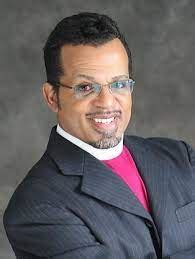
This is an Orthodox blog, so I doubt if many of our readers have ever heard of Bp. Carlton Pearson. He was the co-founder of a wildly successful megachurch in the Bible-belt city of Tulsa, Oklahoma. Pearson was hardly an Orthodox believer, or a canonical bishop, but there is a connection between him and me – we were together at Oral Roberts University. Carlton matriculated in the fall of 1971, a year before me. I hardly knew the upperclassman, but I saw him on campus from time to time and I remember a sermon that he preached at one of the semi-weekly chapel sessions. It was called the “Shepherd’s Bag.” As one who can barely remember what his priest talked about last Sunday morning, I certainly won’t even try to recall what was in the shepherd’s bag, but I do remember the talk’s catchy title.
Carlton himself was catchy. He had the most flamboyant personality of anyone on campus, even more than Oral Roberts himself, the televangelist and founder of his eponymous university. Carlton grew up in his father’s black Pentecostal church in San Diego. At ORU, Carlton sang with the exuberant World Action Singers, the celebrities of the student body who performed to a nationwide audience with Oral Roberts at his quarterly primetime television specials. Oral, who was part Cherokee, identified with ethnic minorities, so he took a liking to Carlton. You might say that Oral played favorites, but in the Pentecostal world effervescence of personality is de rigueur. Richard Roberts was Oral’s biological son, of course, but according to Carlton, Oral claimed him as his black son. They were tight and did a lot of ministering together.
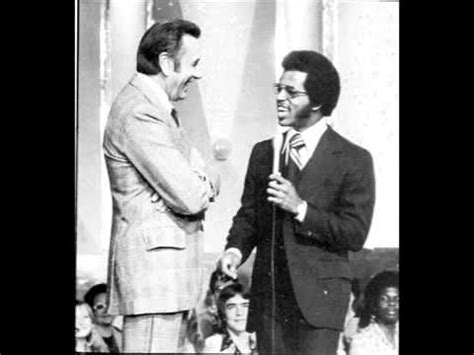
Carlton never graduated from ORU. Instead, he and a white classmate of his named Gary McIntosh started a church on the mostly-white south side of Tulsa in 1977 called Higher Dimensions. This start-up went from 75 to 6,000 in short order. Carlton often appeared in shows on the Trinity Broadcasting Network, where he achieved national exposure. He was a guest preacher the world over and became the recipient of several honorary doctoral degrees. He preached up a storm in a way that one imagines his fathers before him had done, or that Oral himself preached. The contemporary Christian rock music at Higher Dimensions was rowdy. Carlton said his band was “slammin’ it”. The congregation was racially integrated on purpose, beginning with the black and white clerical staff, and people of all shades gathered at Higher Dimensions. Times were good in Tulsa.
They were very good… until Pearson had an epiphany. When his two children were small, Pearson witnessed on television the suffering of the victims of the civil wars in Uganda and Rwanda. He saw the suffering of the people around him. It seemed to him that that there was no hell other than the one right here on Earth. If there is no hell, there is no danger of anyone falling into it. There is no reason to preach the Gospel to save the heathen from it. Jesus Christ, the God of love, had already accomplished the redemptive work for everyone everywhere, so there was no reason for anyone anywhere to repent and believe. Pearson had now embraced the age-old heresy of Universalism. Uh oh.
When he started to preach this newly-inspired old “gospel of inclusion”, Pearson suddenly lost his people. Steeped in the bible and sensitive to heresy, his evangelical and pentecostal congregation shrank in number to 200 in no time. Pearson could no longer pay his staff and he lost the building that was their church home. The other bishops of the black Pentecostal Church of God in Christ upbraided Pearson for his error. Oral Roberts himself, now advanced in years, warned him to turn away from this dangerous heresy. Regardless, Pearson would not relent.

Now, one might ask what Carlton Pearson’s story has to do with me and my Orthodoxy? I was raised a stuffy Episcopalian, but I had a born-again experience while in high school. I started to go to “meetings” and Bible studies with charismatic Mennonites and long-haired Jesus People. That’s what led me to apply for entry into ORU. Those were four of the best years of my life. Fast forward half a century. I’m a former Anglican priest who is now fortunate to be an Orthodox layman. Having experienced Pentecostalism and the Charismatic Movement, and having ultimately converted to the Orthodox Faith, I can look back on Pearson’s saga from an Orthodox mindset and view it as a cautionary tale.
Two things struck me about Carlton Pearson’s very public fall from grace. He seems to have known nothing about the weighty authority of the Orthodox and Catholic Church’s Sacred Tradition. Or, if he was aware of it, he dismissed it. The scant tradition upon which Pearson could base his uber-vocal ministry was the Sola Scriptura of Calvinism spiced with the evanescent rhema, or supposéd utterance of the Holy Ghost. This Pearson expressed in an electrified spirituality, absolutely individual and forever loud and fresh. A successful preacher in this Pentecostal milieu is liable to consider his innovative interpretation of Scripture to be the True Way. As we can see, Pearson did just that.
Pearson had allowed himself unwittingly to build a large-scale personality cult that centered upon himself. He became rich and famous. He was known and praised by the stars of the Pentecostal world. By contrast, we Orthodox, in our quasi-monastic observance of self-abnegation, are taught to keep a low profile. Flashy, pop-music performances and sweaty preaching are entirely foreign to our religious custom. They’re ephemeral and shallow. It’s a shame – no, it’s tragic – that such an energetic minister as Pearson, once distraught by the suffering of his racial kin and skeptical that a loving God could assign anyone to eternal suffering worse than that, did not search for the truth of controversial soteriological issues in the rich and clear consensus of Orthodoxy when it was available to him if he had only sought for it. The trouble with Pearson’s mindset was that it was inspired by the emotions of subjective experience, not the unchanging dogmas of the ancient Church. He soon started to normalize gay relationships on the basis of the vague doctrine of love to which his theology devolved. How does God square away the soul of a minister who has so blatantly and abruptly abandoned Church teachings on eternal damnation?
It’s not our place to question whether the soul of Carlton Pearson has landed in the very hell whose existence he so adamantly denied. Christian charity would prevent us from wishing that fate upon him. I suffered a stroke not long after Pearson’s death and I’ll soon turn seventy myself, so the issue of eternal life with God versus eternal separation from God is now front and center for me and people of my generation. Great Lent is a good time for us to sober up and take stock of our lives.

 Handwritings on the Wall