A Step Too Far

Sarah Mullaly – Archbishop of Canterbury

The appointment of Dame Sarah Mullaly to the historic See of Canterbury in October 2025 has sent shock waves throughout the Anglican Communion. The chair of the Global Anglican Future Conference (GAFCON), Archbishop Laurent Mbanda of Rwanda, in an official communique noted that the decision “abandons global Anglicans.” There is a possibility that when GAFCON meets in Nigeria in March 2026, it will formally break from the Anglican Communion.

[Shortly after this article was posted, GAFCON announced its formal break with the Anglican Communion. See also the informative podcast by Ready to Harvest on the recent GAFCON communique.]

Without doubt, the nomination of a female priest to the highest office of the Anglican Communion is highly controversial. However, her appointment is not all that surprising in light of her high standing as Bishop of London. (The Bishop of London is the third-ranking member in the Anglican Communion after the Archbishop of Canterbury then the Archbishop of York.) It can be expected that the decision will have consequences extending beyond the Anglican Communion to other Christian traditions. How this might affect Orthodoxy is the focus of this blog posting.

Guarding Against False Ecumenism

Historically, the Patriarch of Constantinople has been referred to as the “Ecumenical Patriarch.” The term “ecumenical” means “universal” or “worldwide.” This usage has roots in the Pentarchy, that is, the five patriarchal sees—Rome, Constantinople, Alexandria, Antioch, and Jerusalem—that oversaw the Christian Church in the ancient Roman Empire. After the Great Schism of 1054, the Patriarch of Constantinople came to be seen as the spiritual leader and unifying figure for all Eastern Orthodox Christians. Unlike the Pope of Rome, the Patriarch of Constantinople does not claim universal supremacy but is “first among equals.” Any attempt to impute supremacy to the Patriarchate of Constantinople like the Papacy deviates from historic Orthodoxy and implies a potentially dangerous innovation. Historically, Orthodoxy has recognized the Bishop of Rome as first among equals and considers papal supremacy to be an unacceptable innovation.

Likewise, any attempt to redefine the Ecumenical Patriarchate along the lines of the modern ecumenism has dangerous implications for Orthodoxy. In the twentieth century, a Protestant movement emerged known as the ecumenical movement. Its stated goal was not just the uniting of various Protestant denominations, but also Roman Catholicism and Eastern Orthodoxy. Roman Catholicism in 1964 embraced this new meaning of “ecumenical” in the decree “Unitatis redintegratio.” In that same year, Pope Paul VI and Patriarch Athenagoras met at the Mount of Olives in Jerusalem for prayer and exchanged the kiss of peace ostensibly in an attempt to end the Schism of 1054.
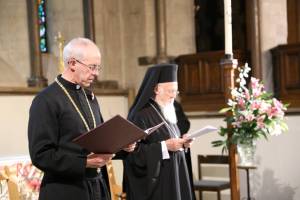
Welby and Bartholomew Praying – 2015

The current Patriarch of Constantinople, Bartholomew, has continued to follow the new meaning of “ecumenical” in his meetings with the Pope of Rome and also with the Archbishop of Canterbury. Bartholomew first met Justin Welby, Mullaly’s predecessor, in 2014. After his enthronement as the Archbishop of Canterbury, Welby visited Patriarch Bartholomew in Constantinople. Then in 2015, Welby reciprocated by hosting Bartholomew at Lambeth Palace. In 2015, Welby and Bartholomew held a joint prayer vigil for refugees. These meetings are far from casual, informal encounters. They are carefully choreographed events full of symbolic gestures much like international diplomatic events at the United Nations’ General Assembly. The glamor of these high-profile ecclesiastical affairs can tempt church leaders to make unwarranted concessions all in the name of Christian unity—hence, the need to guard against false ecumenism.

The Future of Anglican-Orthodox Relations

Saint Justin Popovich

Orthodoxy is far from united on ecumenism. Where some are eager to engage the non-Orthodox, others take a more wary posture. This reluctance stems from their desire to safeguard the Orthodox Faith from innovation and heresy. (For an Orthodox approach to ecumenism that avoids the errors of Western ecumenism see Phillip Calington’s discussion of Saint Justin Popovich’s approach to ecumenism.)

Unlike Western Christianity which has distilled their theology in carefully written documents and precisely worded confessions, Orthodoxy preserves its theology in its Liturgy, the episcopacy, the Ecumenical Councils, and the patristic consensus. One unwritten Tradition has been the all-male episcopacy. Unlike Western Christianity, the notion of women’s ordination has been a non-issue: We’re Orthodox; We don’t change. Where Western Christians often take reason and logic as the starting point for theologizing, in Orthodoxy we understand our faith and practice to be a sacred deposit received from the Apostles and preserved unchanged until the Second Coming. Thus, the Orthodox Church does not feel the need to adjust her faith and practice to contemporary culture. This also means that Orthodox Christians are not obliged to provide a theological rationale for a practice grounded in Apostolic Tradition; however, they are obliged to show that the practice or teaching can be traced back to the early Church. This gives Orthodoxy a stability that is sadly lacking in the West. When one examines the faith and practice of Anglicanism from the 1950s to 2025, one cannot help but be struck by the massive changes in Anglicanism. While it is debatable whether women’s ordination was the start of Anglicanism’s decline into liberalism, it is clear that women’s ordination is not unrelated to the overall liberalization of Anglicanism.

Thus, Sarah Mullaly’s elevation to the See of Canterbury will be highly consequential for Anglican-Orthodox relations. Any indication by Bartholomew of his acceptance of the validity of Mullay’s elevation would imply an acceptance of women’s ordination. Bartholomew’s acceptance of Mullaly’s elevation to the See of Canterbury could happen by his: (1) attending her enthronement service, (2) extending an official invitation to come to Constantinople like Welby’s visit in 2014, or (3) be an official guest to the Lambeth House like the hospitality Welby extended in 2015. Another possibility is an official announcement or personal communication that signals acceptance of Mullaly’s elevation. Of concern to the Orthodox faithful is whether Patriarch Bartholomew will go a step too far and embrace women’s ordination, whether implicitly or explicitly. Such an ecumenical gesture could inadvertently damage Constantinople’s claim to valid apostolic succession.

Orthodoxy’s opposition to women’s ordination is far from a clear-cut, black-and-white issue. Historically, there has been a female diaconate in Orthodoxy; however, the ordination of women did not extend to the presbyterate or episcopacy—both these offices are essential to the Eucharistic sacrifice. Orthodoxy’s opposition is grounded in Orthodox metaphysics, not in mere cultural conservatism. Alexander Schmemann points to the dogmatic underpinnings of the Orthodox opposition to women’s ordination.

I cannot discuss the problem itself because to do so would necessitate the elucidation of our approach — not to women and to priesthood only — but, above all to God in his Triune Life, to Creation, Fall and Redemption, to the Church and the mystery of her life, to the deification of man and the consummation of all things in Christ. (Schmemann in Harvey 2008)

In other words, women’s ordination would go far beyond a modification of ecclesial structures and lead to a wrecking of the dogmatic underpinnings of Orthodox ecclesiology.

Short of all this it would remain incomprehensible, I am sure, why the ordination of women to priesthood is tantamount for us to a radical and irreparable mutilation of the entire faith, the rejection of the whole Scripture, and, needless to say, the end of “dialogues.” (Schmemann in Harvey 2008)

Where in the West ordination is understood in functional terms and gender difference is viewed as mere surface externality (women are capable of ritual actions just as well as men), in Orthodoxy gender differences carry with it profound implications for anthropology, ecclesiology, soteriology, and cosmology. Differences in gender entail more than differences in external form of the human body. Being rooted in the imago dei, differences in gender point to the profound difference in the existential orientation of men and women towards the world, towards each other, and towards God. Where Western modernity has  become untethered from order of creation described in Genesis, Orthodoxy with its adherence to the sacramental worldview and to the Incarnation of the Eternal Logos has continued to honor the male-female distinction established by the divine Creator.

In these unsettled times, what is needed are Orthodox Christians with a solid, unshakable faith who speak boldly with humility and charity, and who avoid unnecessary confrontations. Orthodox Christians need to have in mind the wise admonition in the Epistle of James:

So then, my beloved brethren, let every man be swift to hear, slow to speak, slow to wrath: for the wrath of man does not produce the righteousness of God. (James 1:19-20; OSB)

Orthodox Christians are called to avoid hastiness, whether in thought or in speech. Mullaly’s elevation to the highest office in the Anglican Communion involves several steps. She was nominated to the office of Archbishop of Canterbury in October 2025. A confirmation of election will be held in January 2026 (Maqbool). The date of her enthronement has yet to be announced. Those who worry about overzealous Orthodox ecumenical enthusiasm should approach the matter soberly and not rush to pass judgment. At the same time, they should be alert for any ecumenical engagements that put Holy Orthodoxy at risk. The Orthodox laity have the solemn obligation, as do the clergy and hierarchs, to safeguard against heresy and innovation.

Should Sarah Mullaly’s elevation to the See of Canterbury become official,  many Orthodox Christians will consider this a step too far. In the past, many Orthodox Christians have viewed Canterbury’s claim to apostolic succession with considerable skepticism. The issue for them was not the validity of Anglican orders, but from their failure to keep the Faith. However, the elevation of a woman to this historic office leaves no room for doubt—Canterbury can no longer claim apostolic succession for it has parted ways with historic Christianity. Anglican-Orthodox dialogue has reached an impasse—a situation in which no progress is possible.  Ecumenical engagement is premised upon the assumption that the participating parties can find common ground in faith and practice. (To use a medical analogy, there comes a time when any further attempt to resuscitate the patient is futile and the attending physician is obliged to pronounce the patient dead and note the time of death.)

Evangelicals Received Into Orthodoxy – Halifax, England 2025 (Source)

If the basis for commonality is shattered, then a different approach to Christian unity must be taken. Instead of mutual recognition, the alternative is reception. In the reception model of Christian unity, non-Orthodox faith communities seek to be received into Holy Orthodoxy after they have carefully studied and embraced Apostolic Tradition.

We see this taking place in the recent conversion of an entire Evangelical parish in England to Orthodoxy in 2025. (Source) There are reports of Anglican parishes converting to Orthodoxy, although specific details are hard to locate. There have been instances of Anglican parishes converting to Roman Catholicism. In 2011, some 600 laity and 20 clergy became Roman Catholic through the ordinariate established by Pope Benedict XVI. (BBC 2011)

Helping Hands

The Faith for all Ages

Anglicanism’s crisis extends far beyond women’s ordination. It includes the abandonment of historic Christian doctrines. David Gilchrist recounts how he converted from Evangelicalism to Anglicanism in the belief that that in the Church of England he had found the historic apostolic Faith. However, his confidence was shattered by the elevation to the episcopacy a priest who denied the historic, bodily resurrection of Christ. This crisis eventually led him to convert to Orthodoxy.

Orthodox readers should avoid triumphalist gloating and instead regard Anglicans troubled over Mullaly’s elevation with compassion. Anglicanism has a rich heritage and many devout Anglicans will be loath to relinquish this venerable patrimony. Nonetheless, some have taken this radical step. If they desire to convert to Orthodoxy, it will be a costly decision. However, if Orthodoxy and the Tradition it presents is the Pearl of Great Price (Matthew 13:45-46), then becoming Orthodox will be deeply rewarding. To become Orthodox does not entail the rejection of Anglicanism, but rather its fulfillment. It is important to remember that England was Orthodox before it was Roman Catholic or Anglican. Prior to the Great Schism of 1054, all Christians were part of the one holy catholic and apostolic Church confessed in the Nicene Creed.

Icon – First Ecumenical Council (325)

Becoming Orthodox does not mean becoming Greek. It means a return to the Ancient Faith that extends across the entire ecumene embracing both the West and the East. Irenaeus of Lyons, the second century Church Father, wrote:

As I have already observed, the Church, having received this preaching and this faith, although scattered throughout the whole world, yet, as if occupying but one house, carefully preserves it. She also believes these points [of doctrine] just as if she had but one soul, and one and the same heart, and she proclaims them, and teaches them, and hands them down, with perfect harmony, as if she possessed only one mouth. (Against Heresies 1.10.2; New Advent)

Troubled Anglicans need not despair. The universal Church  described by Irenaeus of Lyons can still be found today. It has continued to present day in the Orthodox Church.

My advice to troubled Anglicans is that they attend a Sunday service at a local Orthodox parish and experience the ancient worship. My other piece of advice is that they compare present-day Orthodoxy with the ancient Church and see if the Ancient Faith has been preserved to the present day in Orthodoxy. Unlike so much of Western Christianity, they will find that Orthodoxy has been able to withstand the temptations and pressures to accommodate modern culture. In Holy Orthodoxy, they will find shelter from the raging storms of modernity. The Orthodox Church is the Ark of Salvation and her Captain, Jesus Christ, cries out:

Come to Me, all you who labor and are heavy laden, and I will give you rest. (Matthew 11:28; OSB)

Athenagoras

References

Aleteia. 2023. “12 Christian leaders to join Pope in ecumenical prayer on vigil of Synod.” 9 September 2023. https://aleteia.org/2023/09/09/12-christian-leaders-to-join-pope-in-ecumenical-prayer-on-vigil-of-synod/

The Archbishop of Canterbury. 2015. “Archbishop and Patriarch Bartholomew hold prayer vigil for refugees.” ArchbishopofCanterbury.org 11 March 2015. https://www.archbishopofcanterbury.org/news/archbishop-and-patriarch-bartholomew-hold-prayer-vigil-refugees

BBC. 2011. “Dissident Anglicans leave Church of England.” BBC.com 9 March 2011. https://www.bbc.com/news/uk-12685062

Encyclopedia Britannica. “ecumenism.” https://www.britannica.com/topic/ecumenism

Phillip Calington. 2016. “Speaking Painful Truth in Love: Orthodox Ecumenism and St. Justin Popovic.” Pravoslavie.ru 16 December 2016. https://www.pravoslavie.ru/99512.html

GAFCON. 2025. “Comunique: Solemn Summons to Global Bishops.” Gafcon.org, 14 September 2025. https://gafcon.org/communique-updates/solemn-summons-to-global-bishops/

GAFCON. 2025. “Communique: Canterbury Appointment Abandons Anglicans.” Gafcon.org, 3 October 2025. https://gafcon.org/communique-updates/canterbury-appointment-abandons-anglicans/

GAFCON. 2025. “Communique: The Future has Arrived.” Gafcon.org, 16 October 2025. https://gafcon.org/communique-updates/the-future-has-arrived/

David Gilchrist. 2020. “The Crisis in the Church of England and the Attraction of the Orthodox Church.” Journey to Orthodoxy, 17 August 2020. https://journeytoorthodoxy.com/2020/08/the-crisis-in-the-church-of-england-and-the-attraction-of-the-orthodox-church/

Greek Orthodox Archdiocese of North America. “Historic Meeting of Pope Paul VI, Ecumenical Patriarch Athenagoras.” 25 January 2014. https://www.goarch.org/-/historic-meeting-of-pope-paul-vi-ecumenical-patriarch-athenagoras

Geoff Harvey. 2008. “Ordination of Women by Father Alexander Schmemann.” TheGoodShepherd.org 16 April 2008. https://www.thegoodshepherd.org.au/blog/ordination-of-women-by-father-alexander-schmemann

Aleem Maqbool and Paul Gribben. 2025. “Sarah Mullally named as new Archbishop of Canterbury.” BBC. 3 October 2025. https://www.bbc.com/news/articles/c2lxyxqzxkdo

Francis Martin. 2023. “Archbishop Welby joins Pope Francis and global church leaders for prayer vigil in Rome.” 2 October 2023. Church Times. https://www.churchtimes.co.uk/articles/2023/6-october/news/uk/archbishop-welby-joins-pope-francis-and-global-church-leaders-for-prayer-vigil-in-rome

Orthodox Christianity. 2025. “Evangelical church in Halifax, England preparing to join Orthodox Church.” 17 February 2025. https://orthochristian.com/167338.html

OrthodoxWiki. 2014. “Ordination of Women.” Last edited 5 September 2014. https://orthodoxwiki.org/Ordination_of_Women

OrthodoxWiki. 2012. “Primus Inter Pares.” Last edited 18 November 2012.
https://orthodoxwiki.org/Primus_inter_pares

Ready to Harvest. 2025. YouTube podcast: “BREAKING: Global Anglicanism Split in Two Today.” [ 7:09] Ready to Harvest 16 October 2025.

Vatican. 2021. “Press Release: Pope Francis, Ecumenical Patriarch Bartholomew and the Archbishop of Canterbury join together for the first time in urgent appeal for the future of the planet, 07.09.2021” https://press.vatican.va/content/salastampa/it/bollettino/pubblico/2021/09/07/0543/01168.html
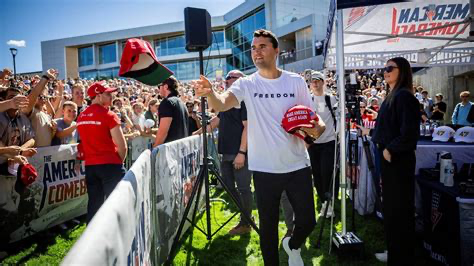
What Did Your Pastor Have to Say?…

…About Charlie Kirk’s assassination.

I’m back in Japan for a few months. My wife and I are up in the Japan Alps, where fall has already arrived. The Christian population in Japan may squeeze in at under 1% of the general population, but there are small churches all over the country. Orthodox parishes are few and far between, however, and the closest one is half a day away from us. I have to admit that I have been attending the worship services of our Christian brethren (cousins?) while we’re away from home. My wife is Catholic, so she and I have gravitated to parishes in that community while we are here. Like Starbucks or McDonald’s, there is always a Catholic parish not too far away. There are three parishes in towns down the mountain and a monastery to boot. I just pray to myself while at mass, and I never receive communion.

This past Sunday, just days after the shocking murder of Charlie Kirk back home in the States, my wife and I went to an evangelical Protestant church. I expected to hear the local preacher mention the tragic event and render some words of wisdom. After all, Charlie was a prominent evangelical Christian and his assassination had gotten a mention on NHK, the national public television network. That’s a big deal.

The whole world is watching and responding to Charlie’s death. Japan has a non-religious society, but people in more Christian nations around the world are saying that they’ve been to church for the first time in their lives, or that they’ve returned to church for the first time in years in the last few days.

Regardless of that, there was not one word from the pulpit about the event at the service we attended . No one mentioned it at tea following the service, either. I got the sense that the pastor and the small congregation live in a pious bubble. I was disappointed.

Sunday rolled around a day later in the U.S., so I checked the livestream recording of the Divine Liturgy from my own Orthodox parish. Nope. Nothing about Charlie, his murder, or the tremendous effect that it has had inside and outside Christian churches. I was disappointed again, but hope that perhaps next week the clergy will say something about it. I have noticed that Orthodox churches tend to navel-gazing as well, so I won’t expect any mention, yet I’ll be happy to be surprised.

One exception has been Fr. Josiah Trenham, whose gracious tribute to Charlie is on YouTube, and which I have shared abroad via email. Fr. Josiah will be a guest with Tucker Carlson soon, so let’s stay tuned. Here’s the tribute:

Charlie Kirk was larger than life and his willingness to proclaim the good news to young people on college campuses and debate the moral issues of our time was effective. I suspect the Holy Spirit is moving mightily now and a great harvest of souls is beginning now that Charlie’s earthly life has been cut short.

Tell me: Did your preacher speak about Charlie last Sunday? If so, please say something in the comments below.

A Blessèd Pascha to Everyone!

Christ is risen!

The Apostle Saint Paul tells us emphatically that without the resurrection our faith is worthless, arguing a priori that if the concept of the dead rising from the dead is mere wishful thinking, then the event could not have occurred:

 I Cor. 15:13 But if there be no resurrection of the dead, then is Christ not risen:14 And if Christ be not risen, then is our preaching vain, and your faith is also vain.

Not to worry. Jesus Christ did indeed rise from the dead:

20 But now is Christ risen from the dead, and become the firstfruits of them that slept.21 For since by man came death, by man came also the resurrection of the dead.22 For as in Adam all die, even so in Christ shall all be made alive.

St. Paul lists the witnesses to Christ’s resurrection:

… he was seen of Cephas, then of the twelve:After that, he was seen of above five hundred brethren at once; of whom the greater part remain unto this present, but some are fallen asleep.After that, he was seen of James; then of all the apostles.And last of all he was seen of me also, as of one born out of due time.

The Lord is risen indeed. Glorify him!

Finding a Key in an Unexpected Spot

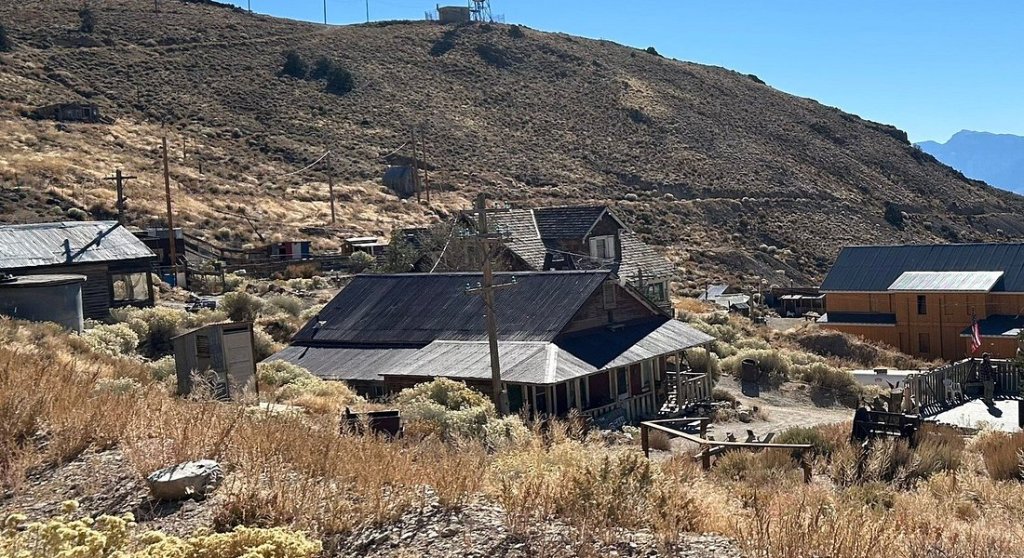
US Hwy 395 used to be a frequent route for me, up the backside of eastern California, through the high desert, past Owens Lake –or what used to be its site, once 100 sq.mi. of water, 200′ deep, with laden barges, now a dry bed of salt & toxic wind-born dust– & past a state historical marker directing to old charcoal kilns that made me always think of my hero, St Alexander the Charcoal-Burner, Bishop & Martyr, as I headed to or from the town of Bishop! Those kilns kept the smeltery at Cerro Gordo blasting for decades, producing a river of silver flowing on down to Los Angeles that made a city possible there, before silver screens were even known, before the water of the lake was hijacked…. In my years in Owens Valley, I never ventured up the long, steep, gravel road to Cerro Cordo, quite desolate in my day. [BTW, Does anyone know if he is the ‘Alexander’ in the old Roman Canon among its forty named martyrs?]

Recently I got the book, “Ghost Town Living” by the new “Mayor” of Cerro Gordo, one Brent Underwood. It was a thrill to read his modern Odyssey, poetically set out in four sections, Earth, Water, Fire, & Air. –You’ll easily know the roots of a classical mind! So it does not come as a complete surprise when traces of liturgy turn up in his digs, musings, & adventures. 

Petroglyphs are part of the desert landscape. Some tell of a “Great Pluvial Period,” when Death Valley held over 700 ft of water; it flowed out then to the Colorado River, & tribes of people hunted animals now extinct on its shores. Owens Lake was part of a watercourse that flowed into it. That’s not part of Brent’s epic, but it does give background for his reference to some of the area’s hidden petroglyphs, some dating more than 8-10,000BC!

He writes, “There are some who believe that the painters were not honoring themselves with the paintings but their prey, imagining that by sacrificing their most precious commodities, food & warmth & medicine, {& time,} to etch the image of these creatures into the stone, they were granting these creatures immortality, & guaranteeing that the next harvest would also be bountiful. In that interpretation, it’s not the painting but the *ACT OF PAINTING* that’s sacramental. They were ritually participating in that ongoing act of Creation, … *The ritual was what mattered.* The paintings that we find now are just an echo of that ritual, like the reverberation in a church right after the organ has finished.” [caps mine]

It strikes me that Brent has touched something fundamental about the painting of the holy Ikons. So I wanted to share his inspiration & insight with this readership, and encourage others to investigate his labor of love and restoration from his kind of “desert skete” in eastern California. Some will find his YouTube series, “Ghost Town Living,” also of beauty and value. 

An Ikon-Writer uses strokes much like a scribe practices the forms of Letters in copying a Gospel text, let’s say.  The Scribe strives to be “letter-perfect” in copying the Gospel, to pass on EXACTLY the Sacred Text.  So, too, the Ikon-Writer. “Free Invention” has no real place, though Inspiration is not ruled out.  Prayer & Fasting, & humble submission, guide a good Ikon-Writer away from deviancies of that sort.  The Holy Spirit can then bring true Freshness to the work that ‘mere Pride’ will not!

____________________________________________

Guest contributor, Christopher P. Kelley, is an Anglican priest who received his seminary training at the General Theological Seminary in New York. Fr. Kelley was ordained in 1974 by the late Lord Michael Ramsay, 100th Archbishop of Canterbury. Fr. Kelley later did work for a doctorate in Byzantine Christian studies with an interest in Biblical archeology and iconography.

This Budde’s for You, Mr. President!

It was the morning of the day that Donald Trump would be inaugurated president for the second and last time. The customary prayer service for the president’s tenure in the highest office in the land was held in the majestic National Cathedral. I visited the grand church many years ago and was duly impressed by the shear scale of the structure on a rise in the otherwise flat District of Columbia. It didn’t take much to impress me because I’ve always been enamored of Gothic church architecture, but that edifice is truly massive. There was something queer about it, though. As I stood in the center aisle near the west door in the back of the church, it was clear that the chancel way up forward was not on center. It was skewed markedly to the left. How symbolic of the politics of the Episcopal Church! Was this flaw a demonstration of the Almighty’s subtle sense of humor?

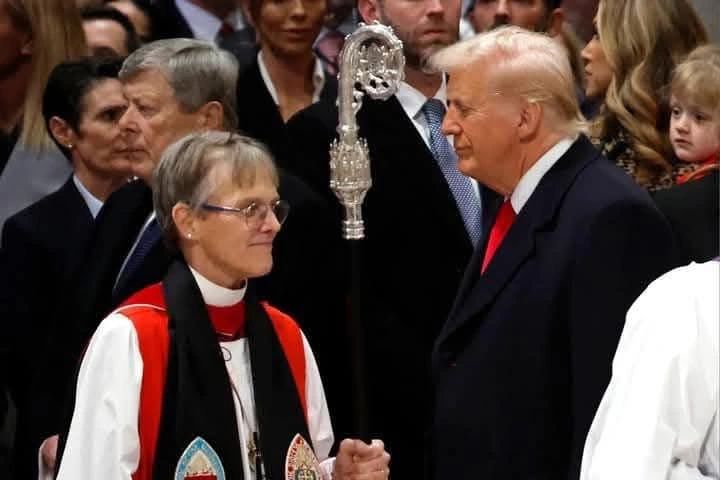
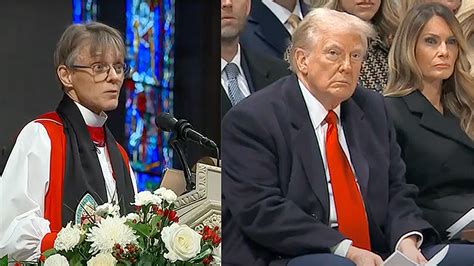
Back to Inauguration Day, 2025. Donald Trump, the non-political real estate magnate and entrepreneur turned politician was soon to be sworn in. He had not yet taken his first action as president, but he sat there chomping at the bit like a race horse in the gate. Protocol demanded that he be docile just for a short duration while he was seated at the feet of Mariann Budde, the bishopess of the small but influential Episcopal Diocese of Washington. Budde is an unassuming woman, small of stature, quiet of voice, lacking the type of personal charisma that one would expect from a hierarch in her vaunted office in our capital city. She was dressed the part in her long rochette and chemire with her master’s academic hood draping down the back, and black tippet down the front. But underneath the finery Budde’s demeanor was thoroughly unimpressive. She would look less out of place officiating at a little noonday service in a side chapel than she did that morning in the nave of the cathedral. I had noticed the lack of appeal in the woman when she officiated at Jimmy Carter’s funeral only days before, so it was clear that she wasn’t just having a bad day the morning of Mr. Trump’s inauguration.

Like ships passing in the night?

The unassuming bishopess reminds me of Winston Churchill’s quip about the prime minister who followed him in office after World War II and whom he in turn succeeded. “An empty taxi pulled up to Whitehall and Mr. Attlee got out.” Dare I say that another nondescript prime minister, the grey but pernicious Keir Starmer has about the same personal appeal as old one-termer Clement Attlee, the father of the British welfare state. Marriann Budde with shortly-cropped hair and lack of makeup looks and acts like these British beta-men. Uninspiring is the word one might use just to be polite.

At the end of her unimpressive homily, Budde decided she had a singular chance to take a dig at the president soon-to-be. In a soft motherly tone, she pleaded with Pres. Trump to have mercy on the transgendered youth and the illegal migrants in the country. Apparently, some were afraid even for their lives. Perhaps those fears are justified, not because of what Pres. Trump might do, but rather because of the permanent damage that bodily mutilation might do. Pleas for so-called “gender-affirming care” are utterly disingenuous. I despise the usage of that misleading euphemism for the chemical interruption of puberty and the butchery of castrations and double mastectomies. Budde spoke in soft, irenic tones implying support for medical interventions that would have delighted the monster Dr. Mengelè of Nazi notoriety. Budde has children of her own; would she have allowed them in their pubescent confusion to complain that they had been born in the wrong body? The devil appears as an angel of light, and sometimes in episcopal finery.

This Budde’s for you, Mr. President!

From her perch in the cathedral’s grand pulpit, Budde urged Mr. Trump to have mercy also on the illegal immigrants that Joe Biden deliberately encouraged to flood into our country. She wasn’t aware how naïve she sounded when she spoke in support of the invasion of millions of unvetted foreigners who have placed a tremendous burden on our welfare safety net. Surely she wasn’t so stupid as to deny the fact that many illegal foreign criminals have raped, maimed, and killed American citizens and stolen their property. Where, O where was the bishopess’ compassion for her fellow Americans and their need to be safe on America’s streets? Likewise for the sakes of many illegal aliens in our country who are trapped here as indentured servants by criminals as child laborers or prostitutes. Deportation may just be the way for some who are at the mercy of drug cartels and gangs of thugs to break free from their own personal bondage.

Imagine the ire that Mr. Trump must have suppressed while he was forced to listen to Democrat talking points coming from the pulpit where Gospel words of encouragement would have been welcome to the ears of the incoming president.

One might get the impression that EMM prefers sexually deviant migrants to run-of-the-mill migrants.

Let us also be cognizant of this fact: Budde’s moral posturing conveniently omits the fact that the Episcopal Migration Ministry (EMM), the federal contracting arm of her church, has been profiting immensely from taxpayer-funded government programs aimed at resettling migrants. In 2023 alone, EMM raked in $53 million to resettle 3,600 individuals, according to the New York Post. (Jim Hoff, Gateway Pundit, 2/5/25) That’s a generous $14,722 per migrant. Did all of that money go to the migrants? One might ask what the Episcopal Church is doing abetting illegal migration anyway.

“I want to build up the liberal church again so we can be a legitimate conversation partner in the public arena,” Bp. Budde told The Washington Post five years ago. (AP, JUNE 1, 2020) The Episcopal Church has always been pretty good at keeping records. Statistics show that the Diocese of Washington — that is the Episcopal Church in our nation’s capital and part of Maryland — suffered a drop in average Sunday attendance at services during the decade between 2014 and 2023. Washington is a small diocese in both land area and membership. Of the 30,000 members, only 13,330 showed up on any given Sunday in 2014, but as one might suspect, that number dropped over the years to 8,483 in 2023, even accounting for an uptick in interest after Covid. Although one must admit that all of the old mainline Protestant denominations have suffered similar losses in attendance over the years, the trend is not exactly a ringing endorsement for Bp. Budde’s episcopate, which commenced when these numbers began to be tabulated. She was consecrated bishop and installed as the diocesan ordinary on November 12, 2011.

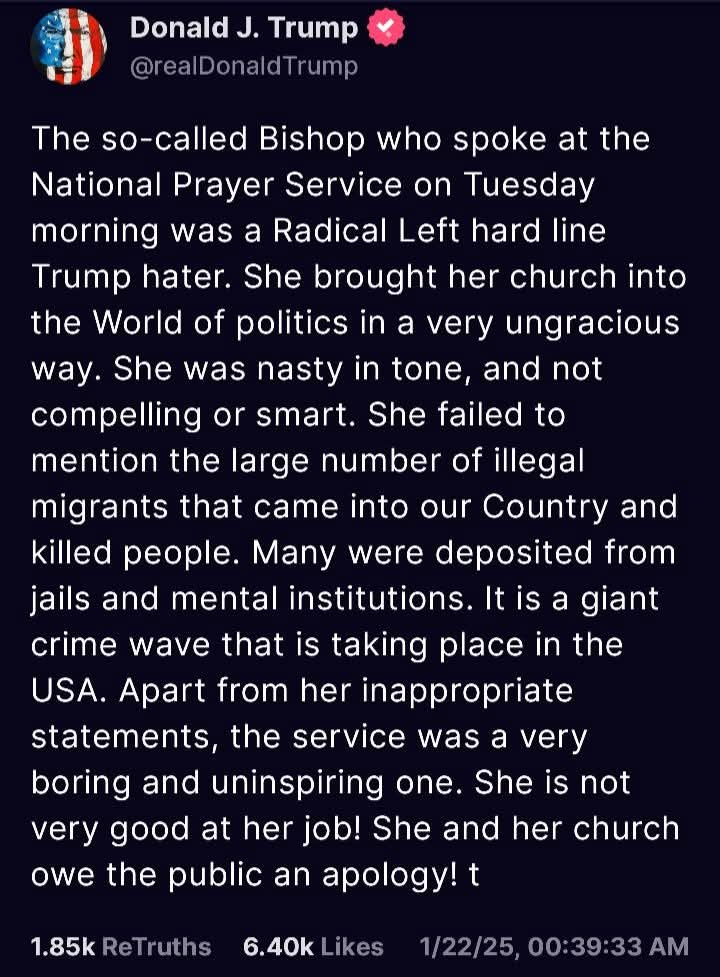
Mr. Trump’s assessment of Ms. Budde is more profound than he may have intended it to be, for truth be told, Budde is no bishop. She is no bishop because she is no priest. She is no priest because she is a woman. The Church — the one, holy catholic and Orthodox Church — has never ordained women to the priesthood, much less the episcopacy. The Episcopal Church adhered to this ancient tradition until 1976, the year that I graduated from college. That is the year when the national Church voted to normalize the so-called ordinations of the Philadelphia Eleven, women who had received the laying on of hands in 1974 by retired robber bishops who acted in ultra vires fashion, scandalizing the entire Episcopal Church. Now saddled with that fait accompli, the liberals in Massachusetts elected Barbara Harris, a radical black priestess and consecrated her suffragan bishop for that diocese in 1988. Barbara Harris, the first woman to be consecrated bishop in the Anglican Communion, was conveniently black, so any critical reaction to her ordination was considered racist, not merely sexist. Women had now swung their hips and barged into all of the major orders of the Church.

Barbara Harris, the first woman to be consecrated bishop in the Anglican Communion, was conveniently black.

With Barbara Harris’ illicit elevation to the episcopacy, any doubt that the Episcopal Church was a swinging branch of the greater Church Catholic was removed once and for all. The Episcopal Church, the American branch of the worldwide Anglican Communion, still prides itself on its claim as the third branch of the Church Catholic along with the Orthodox and the Roman Catholics. They are decidedly not so. They never were, except in their own mistaken theology: the Branch Theory.

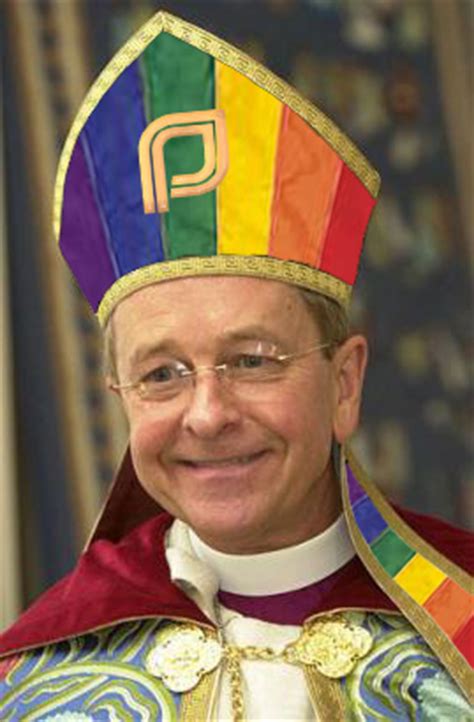
To confirm their contention to be “The Church of What’s Happening Now”, the national Church approved the 2003 election of Vicky Gene Robinson to become bishop coadjutor with right of succession to the seat of the Diocese of New Hampshire. Robinson was a gay man, despite the feminine name, who was once married to a woman with whom he sired two daughters, but then divorced the mother. He came out of the closet and acquired a male partner whom he later “married”… and subsequently divorced. Robinson is not exactly a bishop above reproach.

Bp. Vicky Gene Robinson. His parents wanted a girl, it’s said.
Notice that the capital P on Robinson’s rainbow mitre is in the same font as the P’s in Planned Parenthood. Abortion is another issue enthusiastically advocated by the Episcopal Church.

What do I mean by the Branch Theory? The Anglican Communion as a whole claims that their bishops have always been ordained by senior bishops in an unbroken line of apostolic succession. They can even unroll ecclesiastical genealogies to prove their places on the family tree. The problem is that mere succession to the apostles is not enough to maintain one’s rightful place of honor within the universal Church. Adherence to the Apostolic Tradition is just as necessary as membership in the Apostolic Succession. The influence of the Calvinist and Lutheran movements of the sixteenth century led the mother Church in England to jettison aspects of Tradition which the Catholic Church had maintained even after the eleventh century rupture with the Orthodox East. For example, five of the seven sacraments were downgraded to sacramentals. The mystical epiclesis of the Eucharist was removed. And King Henry VIII plundered the monasteries to fill the royal coffers after he declared himself Supreme Head of the Church of England in 1531, depriving the pope of Rome of his place atop the hierarchy. We Orthodox don’t even accept the Roman Church’s contention that they are the One True Church of Jesus Christ; the notion that the Anglican Communion ever was a branch of the same tree has been utterly rejected by our hierarchs several times in history. The shenanigans performed by the Anglican Churches makes any claim to catholicity utterly laughable now that the Episcopal Church in particular has made a mockery of their Holy Orders.

I must admit with a tinge of sadness that I was born and raised in the Episcopal Church and later was trained and ordained a priest in its sister jurisdiction, the Nippon Seikokai. When the Seikokai decided in convention in 1990 to study the prospect of ordaining women to the priesthood, I knew the handwriting was on the wall. The first woman to be made deacon was Margaret Shibukawa, a senior colleague of mine in the Chubu Diocese centered in Nagoya. She ultimately was the first woman to be priested in Japan. At a clericus in the mountains of Nagano, Shibukawa complained in front of all the clergy of the diocese that I was targeting her for criticism. I stated plainly that my reasons for opposing her potential ordination were not personal, but rather theological. Women had never been ordained to the priesthood because they were not qualified to officiate at the unbloody sacrifice which is the Eucharist. Not only that, but the Scriptures, specifically St. Paul, did not permit women to teach men (I Timothy 2:12). He even prevented women from speaking in the Church! (I Corinthians 14:34) As valid as my argument was, it was ignored by Ms. Shibukawa and our bishop Samuel Hoyo. For that reason and others, I left the Nippon Seikokai and returned stateside with my family in 1994; Ms. Shibukawa was ordained the first woman priest in 1998.

from the website of the Nippon Seikokai provincial office in Tokyo.

Here is what I would say to the bishop of Washington given the chance: Ms. Budde, if I may say so, your vindictive little stunt before the president was uncalled for. You may have scored points among your fellow liberal Episcopalians and Democrats, but a large portion of the country found it to be in poor taste. I agree with the president; you owe him and the country an apology.